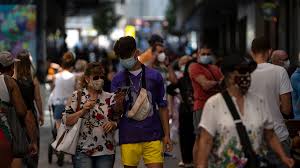
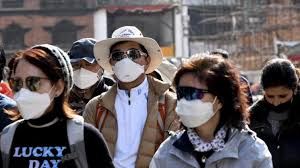
Today has been a flurry of news as President of the Canarian Government, Ángel Victor Torres announced new measures at midday as the Cabinet approved compulsory use of masks in ALL space, both enclosed and open-air. Fears of a second outbreak prompt the Canarian Government to take more drastic action.

Even though the Canary Islands have shown the fewest number of COVID-19 incidents in Spain (22,7 per 100.000 habitants) and is the last to impose obligtory use of masks at all times, these measures have been deemed necessary due to an increase in positive cases over the last 14 days.

The Extraordinary Cabinet Meeting held this morning, Thursday 13th August 2020 was to discuss and analyze the current situation and approve a series of measures to reinforce public health and safety and reduce the number of new cases on the islands. After a debate, the conclusion was the obligatory use of masks in all areas, even those where the safety distance of 1,5 metres can be upheld. Other prohibitions have been put in place with regards to bars, restaurants and nightclubs.

On the 31st July 2020, there was a reported 15 active outbreaks in the Canary Islands; 157 confirmed cases and more than 500 contacts that had been identified and quarantined. However, a mere 14 days later, there are 28 active outbreaks, which translates to 268 cases and 745 contacts that have been identified and quarantined. This situation has been a cause for concern and has prompted this decision which is a step back for the Canaries in the fight against COVID-19.

From tomorrow, Friday 14th August 2020 to coincide with the publication of a new decree in the Canary Islands’ Bulletin (BOC), the use of masks in all public areas will be mandatory for everyone over the age of 6. Remember, this applies to open-air spaces as well as enclosed public areas regardless of whether or not the 1,5 metre security distance can be maintained. The use of masks in private areas where persons from other households meet socially (private dinners, barbecues and gatherings) is recommended.

The decree will also stipulate the correct use of masks, which is to say, it must fully cover the nose and mouth at all times. The mask must also fit the wearer’s face correctly (from the nose to the chin) to prevent respiratory secretions.

Bars, Cafeterias and Restaurants: There are changes here as well. In addition to the above mandates, the maximum occupancy of tables or groupings of tables in these establishments is limited to 10 people regardless of the location of the tables (inside or outside). The 1,5 metre security distance between tables or groups of tables remains as before, and the same applies to seating at the bar itself. The establishment must make sure the security distance is shown clearly on signs.

Nightclubs: The only nightclubs permitted to trade are open-air clubs (terraces). They may only open for public consumption whether the customer is seated or standing. Access is permitted to groups of up to 10 people. The maximum occupancy is 75%, respecting the safety distance between patrons and of course, the use of masks.

Bouncers are required to enforce customers to respect the safety distance and to prevent crowds, paying special attention to the entrance and immediate surroundings of the premises. The Government has also prohibited boat parties where the safety distance cannot be maintained. Verbenas and local fiestas continue to be strictly prohibited.

Smoking: Another measure that has been approved is the prohibition to smoke in public areas to include the terraces of restaurants, bars and clubs. This strict measure has been in the making for a number of days in line with WHO recommendations.

The President of the Canarian Government spoke out about personal responsibility in the fight against COVID-19 as the relation between socializing and new contagion has become apparant. The latest outbreaks have mainly affected under 30s and have been linked to socializing in crowds. It is up to all of us to adhere to social distancing requirements to prevent the spread of the virus. Las Palmas has been named as the main source of the new outbreak, where 95% of the cases are linked to nightlife and young people, principally in an area where three nightclubs have been connected to 60 new cases.

The Canarian Government has not ruled out stricter measures if the population does not act responsibly. The “definitive” law is due to be published tomorrow, so if it outlines additional information or restrictions, I will update this post, so please be attentive and stay safe.
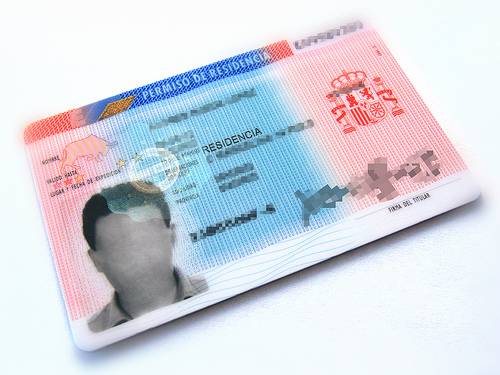

At the end of last week, I had an appointment at the National Police Station to obtain the residencia card for a client, but this did not go to plan because the system had blocked all procedures for British nationals so we walked away empty handed. This was obviously Brexit related although July had not been specifically highlighted as relevant in the transition period, so after doing some digging, it came to light that some changes are coming down the pipeline. I also noted during my investigation over the weekend, that in Part Four of the Withdrawal Agreement, the EU and the UK must make a joint decision before 1st July 2020 as to whether the transition period should be extended beyond 31st December 2020 up to two years.

On Saturday 4th July, the Interior Ministry published a law that details the procedure to follow in line with the UK’s Withdrawal Agreement from the EU regarding residencia applications. Spain is currently the EU country with the most British residents on record, with 359.471 registered on 31st December 2019.

As we all know, the UK left the EU on 31st January 2020 and a transition period began in which all necessary agreements must be confirmed by 31st December 2020, but until that date, EU regulations regarding freedom of movement and other rights would stay in place as if the UK were still a full EU Member State. Those British nationals in Spain who exercise their right to reside and/ or work in Spain during this period will be awarded the same rights as per the Agreement as those who were registered residents before Brexit.

Those who arrive after the transition period (31st December 2020) will be considered nationals from external countries and would have to abide by any new agreements in place between the EU and the UK regarding freedom of movement, Social Security etc.

In any case, the system was down at the end of last week whilst the new procedure was being integrated, and new applications can be made from today, Monday 6th July 2020 until the end of the year. For those whose rights to reside in Spain fall after the transition period, they must submit their applications within three months of arrival or from the moment in which the right begins.

There are different procedures in place depending on the applicants’ circumstances:

  1. Holders of temporary certificates who have not reached five years of legal residency in Spain. A new residency card can be applied for with a five-year validity and it would be classed as “Temporary”
  2. Holders of temporary certificates who have reached five years of legal residency in Spain, but who have not updated their certificate type can apply for a new card valid for ten years that would be classed as “Permanent”
  3. Holders of permanent certificates can apply for the new card which would be valid for a ten-year period and classed as “Permanent”
  4. Applicants who are not yet holders of any type of residencia certificate must go through a two-step process, but it is not 100% clear how it will be managed in the Province of Las Palmas, but the likely scenario is via both the Delegación del Gobierno and the National Police

If you have the green residencia card, you can check your status on the card itself by means of the text, “Residente comunitario permanente en España desde 01/01/1990″ or just “Residente comunitario en España desde 01/01/2019” for example. These cards do not show photo ID, but this will be required for the new cards to be issued.

The law also contemplates current holders of residencia cards obtained via a UK family member, for example, a US national who is married to a UK national who obtained the right to residency in Spain in that way. Although these cards already contain photo ID, they must be updated in line with this new law.

The law does not demand physical presence in Spain after the transition period as temporary absence does not affect the right to reside in Spain.

Government fees will of course be charged for the new residencia cards, but for those of us that remember the old cards with photo ID that were issued prior to the current green card, this will be a welcome change as we weren’t required to carry our passports. At present, exchanging your existing residencia card for the new version is voluntary not obligatory.

Remember, this procedure is only required for BRITISH NATIONALS who reside in Spain due to Brexit. I plan to test the new procedure out on myself and obtain a card (hopefully!) to verify how simple or complex it turns out to be in practice. New information is bound to be released when it becomes available so watch this space for further updates.


Today, and in another COVID-19 update, the Ministry of Health has published Order SND/422/2020, 19th May. This Health Order makes it obligatory to use face masks on the street, in open-air spaces and in any enclosed space of public use or that is located in public areas. This will only apply where it is not possible to maintain the two metre safety distance. The following exceptions apply:

  • Those who have respiratory difficulties that may be aggravated by the face mask
  • In cases where it is not recommended for justified health reasons, for incapacity or for those whose behaviour could be negatively affected (autism, down syndrome…)
  • When carrying out activities where use of the mask may be incompatible or counterproductive
  • For other justifiable reasons

The World Health Organization (WHO) said on 16th April that masks are necessary to continue with the de-escalation phases and to minimize risks in situations of potential contagion. The type of mask to use should preferably be hygiene surgical masks that cover the nose and mouth. Use of face masks is not obligatory for those under the age of 6.

This Order comes into effect from tomorrow, Thursday 21st May 2020 and is expected to continue until the end of the State of Emergency.

Stay safe everyone!


The longer this health crisis continues, the more difficulties are arising, especially for those whose business activities were suspended and now do not have the same income as before. To that end, the Canarian Government by means of the Housing Department published a Resolution outlining the terms to apply for financial aid to make rental payments on the primary home.

This financial aid is only for your primary home and for natural persons, so companies cannot apply. Those who have taken out loans through their banks via ICO can also apply so that this loan can be cancelled. The terms and conditions are as follows:

  • Applicable for persons who due to the COVID-19 health crisis have been furloughed, had their working hours reduced, are unemployed, or if self-employed, have suffered a substantial financial loss
  • The total income of the family unit (those who reside at home) cannot exceed 1.613,52 euros a month
  • The rental amount plus expenses and basic utilities of the home must be equal or greater than 35% of the family’s joint income. There are exceptions if income is greater than 1.613,52 euros (if it is a single-parent household, if there are persons older than 65 years of age, if there are persons who are dependents or have a disability)
  • Financial aid covers up to 100% of the rent, limited to 900 euros a month and for a maximum period of six months. If the application is approved, the applicant would receive an initial payment to cover previous months as long as proof of payment to the landlord is provided, and from there, payments will be made monthly
  • If the applicant took out an ICO loan, this financial aid will either partially or fully cover said loan and for a maximum of 5.400 euros. In this situation, the payment would be made in one full payment
  • The applicant will receive payment directly if they have proved payment of rent to the landlord, but if they have been unable to pay due to the situation, the Housing Department would make the payment to the landlord instead
  • BASIC DOCUMENTS/ INFORMATION TO PROVIDE: (1) Complete copy of the rental contract that details the method of payment (2) Provide receipts for payment of the last three months (3) Names and ID numbers of the family unit (4) Electricity bill (5) Water bill (6) Telephone/ mobile bills (7) Community of Owners bills if payable by the tenant (8) Detail total income received in the family unit (9) Calculation of total income vs. expenses to determine criteria of 35% of joint family income as explained previously (10) Contract for ICO loan (11) Bank account details
  • The application in the form of a Sworn Declaration or Affidavit must be submitted online via www.gobiernodecanarias.org/vivienda using the applicant’s Digital Certificate or Clave PIN. If the applicant does not have the ability to file the application online using these methods, the alternative is to call 928 301 012 (Province of Las Palmas) or 922 470 012 (Province of Tenerife) and the Agent will ask a series of questions etc., so all paperwork must be prepared. Unfortunately, unless an Asesor or representative has an official Power of Attorney granted by a Notary Public, only the interested party can submit the application
  • This financial aid is compatible with other rental benefits the applicant may be receiving as long as the total does not exceed 100% of the total rent due. In that case, the financial aid would be reduced
  • If the application is approved but the applicant’s circumstances changed, they are obliged to inform the Housing Department, otherwise they run the risk of having to return the funds received and a penalty. The same applies if false information is used to obtain benefits
  • EXCLUSIONS: (1) The funds cannot be used for commercial premises (2) If the applicant or members of the family unit own a property or have use of a property in Spain (3) If the landlord is another family member (4) If the property in question is classed as social housing awarded to the applicant by the Canarian Government

This Program has initial funding of 5,3 million euros, which may be increased by 51% if required, reaching a sum of 8 million euros, however, once funds run out, the Program will be suspended.

Good luck!


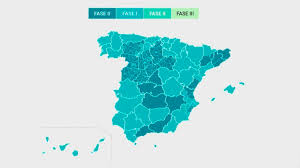
Yesterday, the Health Minister, Salvador Illa Roca signed off on Order SND 399/2020, 9th May to bring certain parts of Spanish territory into Phase One of the gradual de-escalation process to a “new normality”. The islands of La Gomera, El Hierro, La Graciosa and Formentera already belong to the Phase One Club and have been enjoying fewer restrictions for a week now. What are the new rules for this second phase out the four outlined by the government?

The good news is that most retail premises and offices may reopen as well as hotels and tourist accommodation, of course under strict guidelines. We’ll get to the “not-so-good” part later. I’m not going to cover all aspects of the Order, so I have as always put in a link above to the original text so you can do your own research.

OBJECT: This Order applies to those activities that have been detailed therein and in the territorios included in the Addendum. Those who may be particularly vulnerable to COVID-19 are also permitted to these new freedoms as long as their condition is under control, however, anybody who has been diagnosed with the virus or those who are self-isolating at home due to having come into contact with somebody with symptoms or an official COVID-19 diagnosis ARE NOT PERMITTED to participate.

MOVEMENT AND SOCIAL DISTANCING: We are permitted to travel around or province, island or within established territorial boundaries of reference to the de-escalation process, but this does not include exceptions that may see people travel to other parts of national territory for health or professional reasons, to return to their place of residency, to care for an elderly or dependent family member or for situations deemed necessary.

In any case, we must always respect hygiene protocols as well as maintain the mínimum safety distance of two metres between people, or in its defect, ensure protection such as the use of face masks, gloves and sanitizers. Only a maximum of TEN people are allowed to meet under these conditions, except in the case of people who live together.

GENERAL MEASURES IN THE WORKPLACE: Many of you have anticipated this moment for a long time and I imagine you’ve spent the last few days getting ready, so it is important to read through requirements, conditions and new protocols to put into place before you open doors, if the Order allows it, although the Work From Home option is still preferred where possible. This Order is applicable to those retail establishments and premises where services are provided, as long as the premises are equal or inferior to 400m2. The only exception to this rule are those premises located within commercial centres without direct and independent access to their particular unit from the exterior.

So that I don’t repeat myself, the same health and safety measures listed in my previous article apply for the most part (cleaning and disinfection, safety distance, security measures, sample products, serving customers…), so see that link but the premises must be cleaned and disinfected at least twice a day, paying special attention to the most-used surfaces, and then take these other points into consideration. Where the use of public bathrooms is permitted by customers, only ONE person may enter at a time unless they require assistance. The bathrooms must be cleaned and disinfected at least six times a day. Regarding payment, the use of cards is preferrable over handling cash, but the card machines must be cleaned and disinfected after each use as well as the till equipment used by employees if it is not always used by the same person.

The busines owner is responible for implementing the necessary adjustments to the work space, distribution of the shop or office, shifts etc., to maintain health and safety protocols, to ensure that not all employees arrive and enter the premises at the same time and to prevent crowds of customers.

REOPENING OF RETAIL ESTABLISHMENTS AND OFFICES: As mentioned, these activities that were suspended due to the State of Emergency may reopen as long as the main shop or office floor is equal or inferior to 400m2, excluding those located within a commercial centre and does not have direct and independent access to the unit from the exterior as long as the following criteria is met. Note also, this does not apply to those retail establishments and offices that were allowed to remain open:

  • Occupancy must be reduced to 30%. If the shop or office floor is distributed over various floors, the presence of customers on each one must be limited to the same proportion. In any case, the minimum two metre safety distance applies and if this is not possible, only one customer can be admitted at a time
  • Priority service hours for over 65s
  • Car Dealerships, ITV Stations and Garden Centres may reopen to the public regardless of size, using an appointment system
  • All business activities that can reopen under this Order can establish a pick-up point whereby customers may phone in or place an order online and collect it at the premises. This must be staggered so that various customers do not arrive at the same time
  • A home delivery service may be implemented especially for more vulnerable collectives
  • Town Halls may allow open-air markets or non-stationary street vendors (ice cream vans for example) to reopen. Preference will be given to those markets that sell food products as long as the items cannot be handled by customers. The Town Halls must establish requirements for spacing between stalls and whether the normal market area can be extended to cater for new protocols. This is mainly because it will be limited to 25% of the usual stalls and only a third of normal capacity
  • Autoservice, vending machines, self-service laundries etc., must maintain strict hygiene conditions and advise users of the correct use of the equipment by means of signs. In any case, the same hygiene protocols described previously apply
  • Signs must be displayed to indicate maximum occupancy and the safety distance of two metres
  • If a premise has more than one door, ideally, they should be used in a particular way; one (or more) for entering and one (or more) for exiting with clear signs to that effect
  • If there is a parking barrier, ideally this should be left open to avoid contact, but if this is not possible, the security guard should ensure correct use

REOPENING OF HOTEL AND RESTAURANT TERRACES: These establishments may also reopen under this Order according to the following requirements:

  • Open-air terraces that must be limited to 50% of the number of tables permitted in relation to the previous year (in the Canary Islands this is determined on the Registration document issued by the Canarian Tourist Board)
  • In this regard, we must define an “open-air terrace”. According to the Order, this refers to all uncovered areas, or when covered, the area is bordered laterally by a maximum of TWO walls or sufaces
  • In any case, the business owner must ensure a physical distance of at least two metres between tables or groups of tables and that a maximum of ten people per table or group of tables is strictly adhered to (respecting of course the safety distance between them unless they are ALL from the same household)
  • The Order allows for the local Town Hall to authorize extending the normal terrace area. This would allow those businesses who perhaps do not meet the open-air definition to reopen or to increase the number of permitted tables
  • Terrace equipment must be cleaned and disinfected between each use from one set of customers to another, paying special attention to tables, chairs and other contact surface areas
  • Single use tablecloths are preferred, but if this is not possible, they must be replaced between each customer and washed at between 60º and 90º
  • Hand gel sanitizer dispensers must be made available to customers and placed and the entrance of the premises. These must be maintained in hygienic and working order at all times
  • The use of menus must be replaced by electronic displays, boards, signs and similar methods to prevent unnecessary contact
  • Self-service products such as servillete holders, tooth picks, salt and pepper shakers, oil and vinegar dispensers etc., must be removed from tables, using single use packets instead. If required, the customer may request use of other methods (asking for the product to be applied to the dish by staff for example)
  • The silverware, plates, glasses, tablecloths etc., must be stored in closed cupboards, and if this were not possible, in a place that is not frequently transited by customers and employees (avoiding hallways to the bathroom and kitchen for example)
  • Bathroom facilities must be used, cleaned and disinfected as previously described

REOPENING OF HOTELS AND TOURIST ESTABLISHMENTS: Those establishments whose activity was suspended may reopen under the following conditions:

  • Generally speaking, restaurant/ cafeteria services within the premises must adhere to the conditions detailed under that section, although only for customers who are staying there and must not be provided in communal areas as these must remain closed
  • The use of swimming pools, spas, gyms, miniclubs, playgrounds (to include ball parks and similar), discos, event halls and all areas that are not indispensable for the accommodation service is not permitted. These areas must be clearly signposted
  • Bathroom facilities must be used, cleaned and disinfected as described above
  • Clear signs must be displayed throughout the premises in the most appropriate languages to indicate the restrictive use of the installations, new protocols to be observed to provent contagion etc
  • The reception area must guarantee safety distances between employees and guests, or protective equipment must be used
  • Objects and surfaces must be disinfected after each use of a guest or between employees if shared. Hand sanitizer must be readily available to guests
  • Prior to reopening, the entire establishment must be cleaned and disinfected
  • Once open, the most frequently used objects and surfaces that come into contact by different people (buttons in lifts and vending machines, banisters, railings, door handles, bells, taps…) must be cleaned and disinfected at least every two hours
  • Guests must be advised of new protocols and restrictions regarding use of the installations PRIOR to confirming a booking. This must be done in writing in a language the guest can comprehend

OTHER APPROVED ACTIVITIES (conditions obviously apply):

  • Social Services
  • Educational Centres and Universities
  • Scientific Research
  • Libraries
  • Museums
  • Filmmaking
  • Cultural Events
  • Professional Sports
  • Active Tourism and Nature Activities

Fulfilment of requirements of these new measures are responsibility of Municipal Inspection and Police Forces within their jurisdiction. Businesses are not permitted to take any commercial action that may result in crowds of customers within the premises or waiting outside. This does not prevent sales from taking place or offers advertised online, it is a precaution.

There was a lot of speculation about whether the remaining Canary Islands would advance from Phase Zero to Phase One due to the condition about the number of available beds at each hospital’s Intensive Care Unit, however, the Addendum of this Order states all eight islands (Tenerife, Gran Canaria, Lanzarote, Fuerteventura, La Palma, La Gomera, El Hierro and La Graciosa) are included.

This Order comes into effect from midnight 11th May 2020, and will remain so until the end of the State of Emergency and any of its extensions. One question that I am sure has already crossed your minds has to do outside tourism, especially those who are in the restaurant and hotel industries, and I’m preparing another article about that.

The other question that has probably arisen is about permittible hours to carry out individual sports activities… I can only conclude that since nothing specific is mentioned within this Order, that the hours established for Phase Zero are still in effect until we’re told otherwise. One change that can be implemented by Autonomic Authorities is when children are able to go outside with their parents as some regions said that climate is a major factor. These hours may be amended to up to two hours earlier or two hours later than stipulated, but any change here will affect the hours for adults and above 70s and dependents as well.

I expect further information about this transtion to Phase One will become available in the upcoming days to resolve any doubts.