I do remember a time when my post’s titles did not begin COVID-19! Since the country entered into a State of Emergency on that fateful Saturday 14th March 2020, there have been many articles in the media about the restrictions that have been imposed on us, but although we have now been in lockdown for just over a month, there is still a lot of confusion about what we are allowed and not allowed to do. Let’s recap…

The Directorate of the Nacional Police issued this document that explains different scenarios, and here I’m going to summarize the key points so you can be informed and more importantly stay safe (and avoid potential fines!):

1. Royal Decree 463/2020, 14th March (amended by Royal Decree 465/2020, 18th March) states that we are restricted in our movements. We can only move about on streets or public areas for the following activities, and even then, they must be done individually unless we must accompany a minor, a person with discapacities, the elderly or another justifiable cause:

a) To buy food, medication or essential items

b) To go to hospitals, clinics or other medical centres

c) To travel to and from the workplace or for business owners to carry out services

d) To return to our primary residence

e) To look after the elderly, minors or other dependents

f) To travel to and from banks and insurance companies

g) For emergent cases

h) Other activities of a similar nature

What happens if you get stopped by police forces when carrying out any of the above activities? You would be required to produce justification of your journey such as a receipt from the shop for your purchases or an appointment slip or doctor’s report for example. The police may ask for proof of address to determine whether your trip is justified, so if you venture too far from home, you may be cautioned or fined and told you must shop more locally.

As you know, children are not permitted to leave home unless it is strictly necessary (hospital visit for example), but if the child lives in a single-parent environment and cannot be left at home alone, they may accompany the parent. Do not abuse this because if the child is considered old enough to remain at home unsupervised while the parent goes shopping for example, the police could take action so just because the child may be under the age of 18, it does not mean they must go everywhere with you.

Another important question that has arisen is again about children and those parents who have shared custody. This document indicates that movement is permitted to collect and drop the children off at their respective parents’ homes. In this situation, the police would require the legal ruling , divorce or custody agreement as proof.

We’ve all seen memes about dog sharing as the perfect excuse to get some fresh air, and there was the fantastic case in Lanzarote about a guy who was fined for taking a COCKEREL out for a walk with a piece of string! Dog owners are allowed to walk their dogs, BUT… this must not be abused either. Only short walks are permitted so the dogs can do their business (obviously all responsable owners will clean up the mess!) and no contact with other dogs or owners is allowed. They recommend going out at the least busy times when you may come across other owners, but more importantly, YOU MUST NOT VENTURE TOO FAR FROM HOME. The police WILL verify your address and recently, a woman in Lanzarote was fined for putting her dogs in her car and driving 5km to a spot where she wanted to walk her dogs.

If you own other types of animals, you are permitted to go out to buy food etc for them and if they should get ill, vets are authorized to work.

Thanks to social workers, some rules have been relaxed for certain people who have discapacities or those who are on the autistic spectrum because extreme lockdown regulations and the upset to their normal routine is very distressing for them, so they may go out for accompanied walks maintaining social distancing measures. The police may require a medical report if their condition is not visibly obvious to the officer.

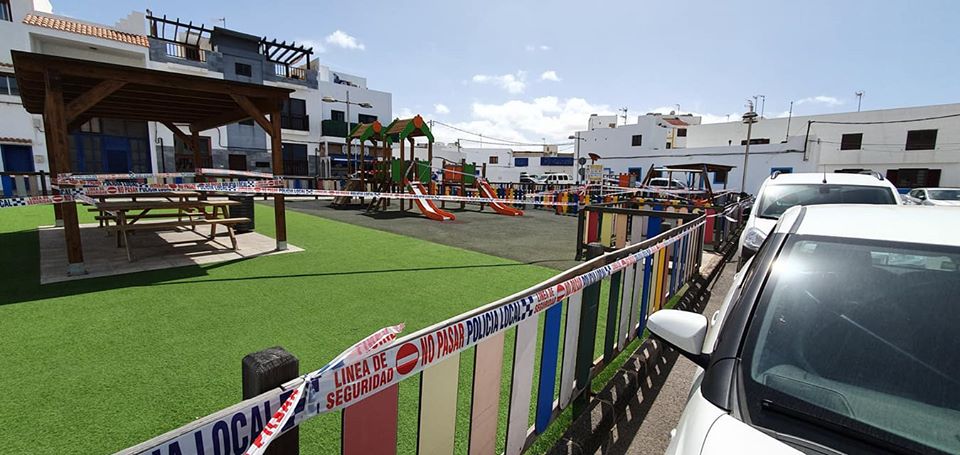
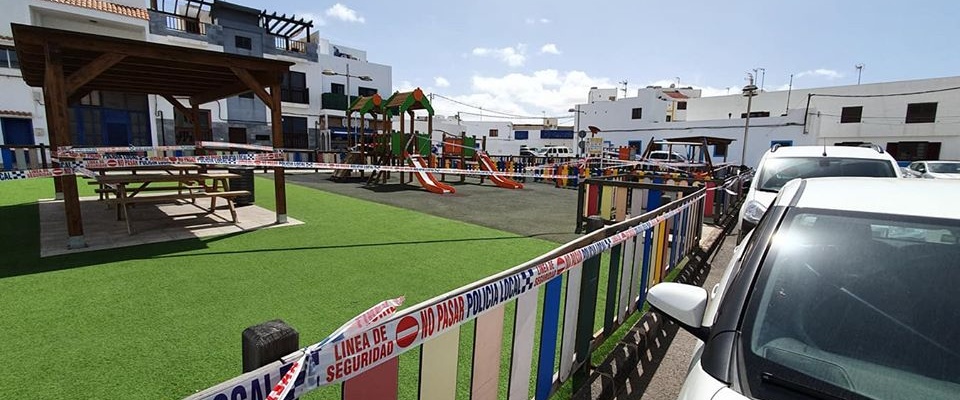
The use of communal areas within communities of owners is prohibted and the president may be required to seal off said areas if necessary.

The homeless are permitted to remain on the streets as they do not have permanent residence, however many are being relocated to social housing while the crisis lasts. In La Oliva, many have been moved to the Municipal Sports Centre where food is also being distributed.

You are not permitted to travel to your second home if you are lucky enough to have one.

For the duration of the State of Emergency, no religious service may be held. A máximum of three persons besides the minister are permitted to attend funerals or cremations.

This following point has been a major issue. How must we travel in cars if we have to go out? Travel is only acceptable for the above-mentioned approved activities or to fuel up at a petrol station. If more than one person is in the vehicle, they must be in the back seat or if there is more than one row of seats, ONE PERSON PER ROW maintaining as much separation between them as possible. If more than one person is in the vehicle, their presence must be for a valid reason.

Many businesses have sadly been forced to close down for the duration, but other business activities are still authorized. Although they are working behind closed doors for the most part, there are rules to ensure social distancing.

Employees are required to carry a certificate issued by their boss stating their job, address of the workplace and work hours. This document must be signed and stamped. Alternatively, they may also carry their last payslip or work contract as proof.

Athough it is perfectly legal for business owners to continue their activity, they must also carry documents as evidence, such as business registration documents, their last tax return or their Municipal Opening Licence (I did chuckle at that last one because in La Oliva, official Opening Licences are like gold dust, it is rare to see one!)

This lockdown is taking a toll on everybody and we are starting to see individuals starting to break the rules and go out for non-essential purposes, to go for a run, to take their children out for a walk or even to visit Friends. There is a reason why we are doing this, so to deliberately flaunt the rules puts others at risk and creates scenarios where the virus could spread further. Remember, we are staying home to relieve the National Health Care System, so with that in mind, lets be considerate and hopefully restrictions will be lifted sooner than expected.

I hope this summary has helped those who still had doubts about regulations. You can read the document for yourselves, albeit in Spanish here. If you’re anything like me, since this started, I find myself telling people on the TV screen, they are standing too close together! It is pretty scary how quickly we have adapted to this situation and now physical proximity or contact with others now feels alien.

Since last Friday, we have heard whispers the National Tax Office may postpone the date to file taxes for the first quarter of this year, but this was not debated until yesterday, and finally published this morning. Royal Decree-Law 14/2020, 14th April is the latest addition to a growing list of laws that have been approved in the month since the entire country has been in a State of Emergency.

This new decree states that the deadline to file taxes has been extended to 15th May 2020 (that is for accountants to file the returns) with payment due on 20th May 2020, as long as the sole trader or company’s income did not exceed 600.000 euros in 2019 (which means approximately 95% of all businesses in Spain will benefit from this change).

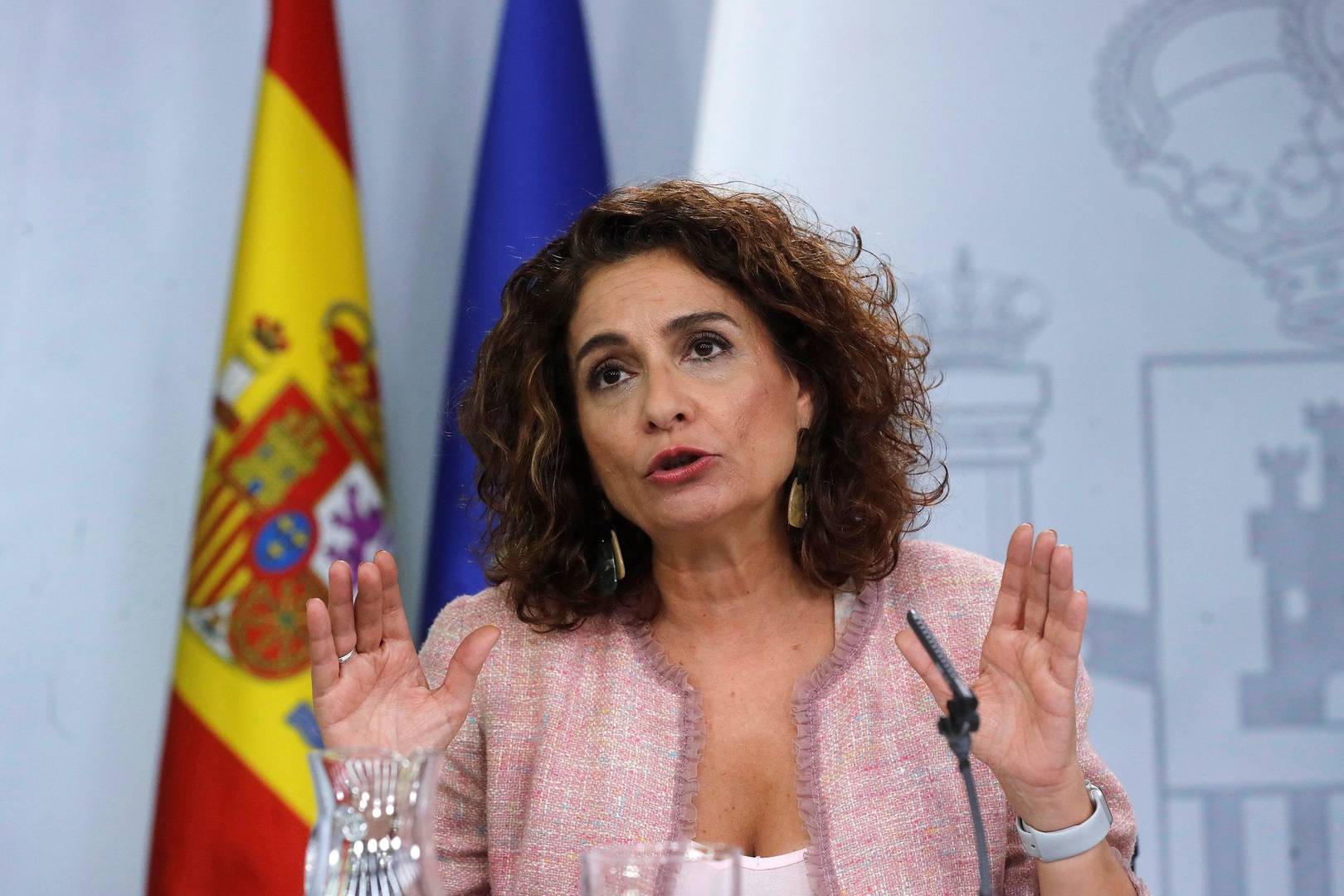
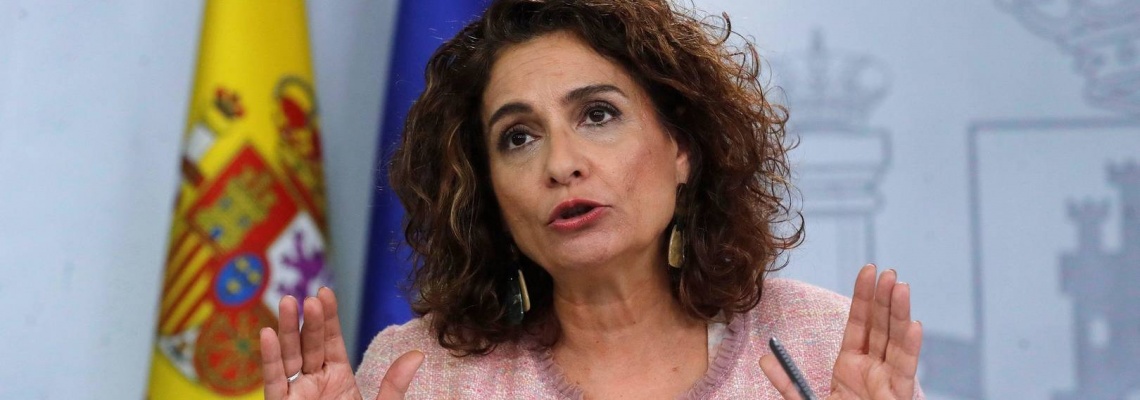
The Treasury Minister and Spokesperson for the Government, María Jesús Montero said in yesterday’s press release that this measure will help businesses fulfil their tax obligations and allow for better cash flow under these difficult circumstances. Associations that represent accountants, economists and the like have rallyed the Tax Office to take this step because of difficulties in contacting clients, obtaining the necessary paperwork etc., but the Tax Office has had a long time to make this decision and has chosen to wait until the deadline to make it official.

I would like to say a massive THANK YOU to all of my clients who have been fantastic throughout this situation. They managed to get their accounts to us and we were able to input their documents and advise them of the tax result before the deadline just in case the Tax Office did not back down. Although most taxes were filed, they won’t be charged to your bank accounts until 20th May 2020 as shown in the decree. All requests for payment of these taxes in installments will also be honoured.

On another note, I have some statistics of interest for you:

* 941.000 applications for sole trader unemployement have been registered

* 396.000 sole traders and companies have applied for ERTEs (suspended contracts for their employees)

* 36.048 employees who have either contracted the virus or have had to self isolate are receiving financial aid in concept of Professional Illness


Since my last post, we have experienced a rollercoaster both personally and professionally as every aspect of our lives is affected by the lockdown in effect. Spain’s lockdown is so far the strictest and our Government has alerted us that it will be extended once again until 26th March, but that it will more than likely be prolonged even further.

The latest decree that affects sole traders and small to medium businesses, Royal Decree-Law 11/2020, 31st March which was published on 1st April contains a series of measures to provide much needed aid.

DEFERRED PAYMENT OF SOCIAL SECURITY CONTRIBUTIONS: The Social Security Treasury will grant upon request a six-month interest free extension on monthly contributions, which for sole traders will be those due between May and July 2020 and between April and June 2020 in the case of small to medium businesses. The irony here is that this was decided on the same day the Treasury charged March’s contribution to our bank accounts!

The specifics to apply for this aid is to be confirmed, but what we do know is that it applies to those businesses whose activity was not prohibited under Royal Decree 463/2020, 14th March. This measure does not apply to businesses that have suspended employee contracts under the ERTE system. We also know that the applications must be submitted 10 days before the fee is due to be charged which is always the last working day of the month. Although applications will be considered approved, the Treasury has three months to officially respond in case the applicant is not eligible to defer payment.

Deferred payment of any type will only be approved if the applicant does not have prior debts with the Treasury, and as always, penalties apply if they detect false information or fraud. This measure is detailed under Article 34 of this decree.

As mentioned, the contribution for March has already been charged, which means that many sole traders and small to medium businesses who applied for Sole Trader Unemployment will be due a refund.

DEFERRED PAYMENT OF SOCIAL SECURITY DEBTS: Article 35 of the Decree outlines that if any sole trader or small to medium business owner accrues debt with the Treasury for payments due between April and June, they may request delayed payment, but 0,5% interest on the amount would apply. This will only be approved if the applicant does not have prior debts with the Treasury and does not currently have an existing deferment in place. The application must be submitted in the same time-frame as described previously.

UTILITIES: Many businesses had to close their doors from day one of the state of emergency, and the Government has agreed that utility contracts (water and electricity) can be suspended without penalty and that payment of bills that coincide with dates within the state if emergency can be suspended also. However, be advised that should you suspend payment, you may not switch company until payments are brought up to date.

DEFERMENT OF MORTGAGES ON BUSINESS PREMISES: Delayed mortgages was first mentioned in Royal Decree-Law 8/2020, 17th March but only for the applicant’s primary residence, however, this latest decree is extending this financial aid to business owners for premises linked to their business activity as well as landlords (natural persons not companies) who are no longer receiving rental income as a result of measures that apply to tenants. This aid applies to those business owners who are considered financially vulnerable due to suspended activities and loss of income. Conditions obviously apply.

FINANCIAL AID FOR PAYMENT OF RENT OF PRIMARY RESIDENCE: Article 10 of this decree refers to special aid that has been put into place for those who forsee difficulties making rent. If the applicant does not meet the criteria for automatic derferment of rent, this line of credit is for up to 900 euros per month or in some cases 100% of the rental amount if the business owner can demonstrate they are in a vulnerable situation.

The Decree is 88 pages long so this is a very brief summary, but their are other provisions for different circumstances, such as receiving payment from an existing pension plan or signing on for benefits to pay electricity bills in the home if you meet the criteria. There are changes on a near daily basis as the Government navigates the minefield that is COVID-19 and the imposed quarantine.

Stay safe!


Following on from yesterday’s email, Royal Decree-Law 8/2020 was published yesterday to complement Royal Decree 463/2020, 14th March.

The chain reaction the outbreak of COVID-19 as caused throughout the world that initially concentrated in China, interrupting much of the world’s production and manufacturing output has now filtered down to other dependent sectors, affecting export and supply.

We have also seen the direct impact it is having on domestic finances, the closure of schools, the cancellation of public events, flight and other transport bans that have primarily shaken the tourist industry, not to mention the effect on the global stock market. The limitations imposed on us since last Saturday have meant restrictions on freedom of movement, quarantine which have generated incredible issues within the family unit and businesses alike, especially for those families whose income derives from the type of activities that have been temporarily banned by the government.

The government’s priority right now is to minimize as much as possible the impact of this lockdown and facilitate measures to ensure we can all bounce back as soon as the situation improves.

Some of you emailed me yesterday about the new situation and as mentioned in my previous email, I spent the day reading through and clarifying certain points of the decree that were not  so I can summarize its key points to you. If after reading this email, you still have queries or concerns about your situation, please do not hesitate to contact me again. Since there has been no official has been published about Holiday Lets, the only thing I will say at this time is that there is a difference between the types of accommodation being mentioned (hotels, camping and caravan sites…) and self-contained units such as private apartments and villas. Hotels and similar call for groups of people to be attended to in the dining area for example as the rooms are not self-sufficient, so this closure may only refer to these types of accommodation. This is not official as mentioned, only my own deductions, however, if your property is currently occupied, remember, the government is encouraging people to return to their countries of residence until this crisis is resolved mainly because airspace is due to be closed down or greatly reduced.

According to this Royal Decree-Law, the following measures have been approved:

1.- Extraordinary Social Security benefits for closure of business activity for those affected by the declared State of Emergency in order to regulate the health crisis produced by COVID-19:

a) Exceptionally and limited to one month1 from the date in which Royal Decree 463/2020, 14th March came into effect when the State of Emergency was officially announced, those sole traders whose business activities were shut down have the right to these “unemployment” benefits as long as the following criteria is met:

  • To be affiliated and currently registered as a sole trader (Régimen Especial de la Seguridad Social de los Trabajadores Autónomos) or at least on the date the State of Emergency was announced (14th March 2020)
  • In the event, your business activity was not directly shut down by virtue of the above-mentioned Decree, you must provide evidence that your billing during the month prior to applying for unemployment benefits has been greatly reduced by at least 75% in comparison to the average billed over the six previous months
  • To be up to date in payment of all Social Security contributions. If this is not the case, they allow a maximum of 30 days in which to make these payments and access unemployment benefits

1 Unemployment benefits would be extended to the last day of the month in which the State of Emergency concludes, should this situation last more than one month

b) The benefit amount is calculated by applying 70% of the average base rate you have paid over the last twelve months, which is to say, twelve consecutive months and immediately prior to applying. If the applicant has not been registered as self-employed for twelve months, therefore not meeting the normal criteria, the benefit amount applicable would be the equivalent of 70% of the minimum base rate

c) As stated, the duration of this extraordinary benefit is one month, which could be extended to the end date of the State of Emergency, however, this time would be recorded as if you had continued paying into the system as normal, i.e., it does not interrupt your registry as self-employed and it does not reduce the time you may receive this same benefit if you have to apply again in future (for a situation unrelated to COVID-19

d) Receipt of unemployment benefits mean you would not be liable to pay Social Security contributions. For those who continue their business activity, you must pay the monthly contribution as normal

e) Receipt of unemployment benefits is incompatible with any other Social Security benefits

f) Working partners linked to co-operatives will be granted the same rights to access these benefits as long as they meet the requirements established above

IMPORTANT NOTE: The Decree does not mention if this applies to Sole Traders registered as Family Collaborators. I am trying to find out whether they would have the right to unemployment after the principal Sole Trader applies.


2.- Measures to regulate employee contracts to avoid dismissals:

a) There is a system in place for those businesses that have suffered the most severe losses due to forces beyond their control such as this health crisis called ERTE (Expediente de Regulación Temporal de Empleo). What is the definition of forces beyond control in this situation?:

  • Suspension or cancellation of business activities
  • Temporary closure of premises open to the public
  • Restrictions on public transport
  • General restrictions and freedom of movement of people and/or merchandise
  • Loss of provisions that hinder the normal development of the business
  • Contagion within the company
  • When extraordinary measures of preventative self-isolation have been enforced in the company

b) In the case of those businesses that on 29th February had less than 50 employees, Social Security will absorb the business owner’s obligatory payments 100%. In the case of those businesses that on 29th February had more than 29th February had 50 employees or more, Social Security will absorb 75% of the business owner’s obligatory payments. These obligatory payments referred to here DO NOT include the business owner’s own monthly Social Security contribution

c) Employees affected by the ERTE system have the right to receive unemployment even if they have not been registered employees for a full year as normally required by law

d) Businesses that choose the ERTE system are obligated to maintain all employees in the company for at least SIX MONTHS after business activities return to normal

e) Social Security must respond to the application within 5 days

f) Employees who have dependents (minors or elderly) should be permitted to take leave to see to their family in the best way possible, however, employees who are absent from their place of work for unjustified reasons may be dismissed (the proper procedure must be followed)


3.- Business Line of Credit:

The Ministry of Economic Affairs will grant a line of credit to ensure cash flow in affected companies (payment of invoices, financial or tax obligations or other cash flow issues). The maximum amount is 100.000 euros and conditions are being drafted


4.- Extensions for Mortgage Loans:

a) For those who have especially difficult circumstances due to the COVID-19 crisis and are unable to make mortgage repayments on their mortgages, special measures apply for their primary residence only

b) Those debtors that fall under the category of “economic vulnerability” as established in Article 9 of the Decree-Law (or point c of this document) and whose contracts are currently in effect. These same measures apply to guarantors of the debtors

c) Definition of economic vulnerability:

  • The debtor has been made unemployed or in the case of sole traders, has suffered a substantial loss of income or a substantial fall in sales
  • That the total income of the family unit does not exceed the income received in the month prior to applying for the extension
        • In general terms, the limit of three times the monthly Indicador Público de Renta de Efectos Múltiples (IPREM)
        • The above limit will increase by 0,1 the IPREM for each dependent child or 0,15 for each child in a single-parent household
        • The general limit will increase by 0,1 for each family member over the age of 65
        • If any family member has a declared disability higher than 33%, dependent situation or illness that does not permit them to work, the general limit will be four times the stipulate IPREM, regardless of any increases

There is still a little bit of uncertainty about some of these measures as procedures have not been clearly outlined etc., and the Administrations themselves are not entirely sure what the logistics would be, but if you would like to proceed with any of these options, please contact me to discuss how best to move forward. If not, it is business as usual until we all come out fighting the other side.

As always, take care


Spain is on a preventative lockdown to help stop the rapid spread of the Coronavirus throughout the country. As the Canaries are part of Spain, all approved legislation applies to us too. I haven’t posted anything publically since we were officially put on lockdown at midnight on Saturday 14th March 2020 because my primary concern has been for my amazing clients and their businesses, so references to yesterday’s email etc is because of the information they were sent as matters were unfolding. Apologies by the way to my registered monthly clients because you may receive this information automatically again as suscribers to this blog (I will try to stop that from happening), but at the same time, I want to say how in awe I am of all of you because you are handling this extreme situation like troopers even though many of your businesses were the first to be affected by the lockdown. I am really proud to count you as clients and I wish you the very best as you navigate daily uncertainties about the future of your businesses while at the same time many of you are also looking after small children, elderly parents, siblings and dependents. It gives me a glimmer of hope…