
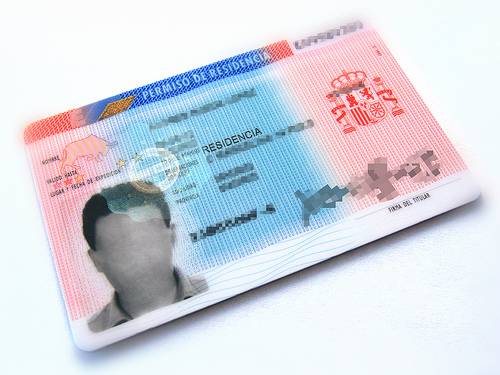
At the end of last week, I had an appointment at the National Police Station to obtain the residencia card for a client, but this did not go to plan because the system had blocked all procedures for British nationals so we walked away empty handed. This was obviously Brexit related although July had not been specifically highlighted as relevant in the transition period, so after doing some digging, it came to light that some changes are coming down the pipeline. I also noted during my investigation over the weekend, that in Part Four of the Withdrawal Agreement, the EU and the UK must make a joint decision before 1st July 2020 as to whether the transition period should be extended beyond 31st December 2020 up to two years.

On Saturday 4th July, the Interior Ministry published a law that details the procedure to follow in line with the UK’s Withdrawal Agreement from the EU regarding residencia applications. Spain is currently the EU country with the most British residents on record, with 359.471 registered on 31st December 2019.

As we all know, the UK left the EU on 31st January 2020 and a transition period began in which all necessary agreements must be confirmed by 31st December 2020, but until that date, EU regulations regarding freedom of movement and other rights would stay in place as if the UK were still a full EU Member State. Those British nationals in Spain who exercise their right to reside and/ or work in Spain during this period will be awarded the same rights as per the Agreement as those who were registered residents before Brexit.

Those who arrive after the transition period (31st December 2020) will be considered nationals from external countries and would have to abide by any new agreements in place between the EU and the UK regarding freedom of movement, Social Security etc.

In any case, the system was down at the end of last week whilst the new procedure was being integrated, and new applications can be made from today, Monday 6th July 2020 until the end of the year. For those whose rights to reside in Spain fall after the transition period, they must submit their applications within three months of arrival or from the moment in which the right begins.

There are different procedures in place depending on the applicants’ circumstances:

  1. Holders of temporary certificates who have not reached five years of legal residency in Spain. A new residency card can be applied for with a five-year validity and it would be classed as “Temporary”
  2. Holders of temporary certificates who have reached five years of legal residency in Spain, but who have not updated their certificate type can apply for a new card valid for ten years that would be classed as “Permanent”
  3. Holders of permanent certificates can apply for the new card which would be valid for a ten-year period and classed as “Permanent”
  4. Applicants who are not yet holders of any type of residencia certificate must go through a two-step process, but it is not 100% clear how it will be managed in the Province of Las Palmas, but the likely scenario is via both the Delegación del Gobierno and the National Police

If you have the green residencia card, you can check your status on the card itself by means of the text, “Residente comunitario permanente en España desde 01/01/1990″ or just “Residente comunitario en España desde 01/01/2019” for example. These cards do not show photo ID, but this will be required for the new cards to be issued.

The law also contemplates current holders of residencia cards obtained via a UK family member, for example, a US national who is married to a UK national who obtained the right to residency in Spain in that way. Although these cards already contain photo ID, they must be updated in line with this new law.

The law does not demand physical presence in Spain after the transition period as temporary absence does not affect the right to reside in Spain.

Government fees will of course be charged for the new residencia cards, but for those of us that remember the old cards with photo ID that were issued prior to the current green card, this will be a welcome change as we weren’t required to carry our passports. At present, exchanging your existing residencia card for the new version is voluntary not obligatory.

Remember, this procedure is only required for BRITISH NATIONALS who reside in Spain due to Brexit. I plan to test the new procedure out on myself and obtain a card (hopefully!) to verify how simple or complex it turns out to be in practice. New information is bound to be released when it becomes available so watch this space for further updates.

Recently drivers with foreign issued licenses have received mixed messages about whether it is legal for them to drive here on the license they have or whether they are obligated to apply for a Spanish driving license. Since this topic has generated quite a bit of confusion and with the help of Sabrina, we’re going to try to clear matters up but as you will see from our personal experience, we have not been able to clear up the confusion completely, and would welcome your comments.
The Facts: Any drivers license issued within the EU is perfectly valid in all member countries as long as the license has in no way been suspended or revoked.
The Confusion: When the license holder takes up permanent residence in another member country, that country has its own traffic laws that need to be adhered to. For example: the point system in Spain differs to the system in the UK. Here points are taken off not added.
Breaking the law: If the holder of a license issued by another member country but a resident in Spain violates traffic laws they may be fined on the spot, but as they are not registered on the Spanish system, points cannot be deducted. For this reason, Real Decreto 818/2009, 8 de Mayo was approved in 2009 to regulate the loop hole; this law was recently revised and came into effect on the 19th January 2013.

According to the newly enforced law, once an EU driver takes up residence in Spain, there are two options:

  1. To register their drivers license at Tráfico
  2. To hand over their UK issued license and obtain a Spanish one

This is how this law was initially understood but after further investigation, the correct interpretation is that:


  1. Only holders of a drivers license that has no expiry date are obligated to register their license on the Spanish system.
  2. If a drivers license has an issue and expiry date it is not obligatory to register the license on the Spanish system, however they are required to pass a medical exam. Bear in mind that if circumstances have changed since the license was originally issued, ie, the holder now wears glasses…, a Spanish license that reflects that detail must be obtained.
  3. If a holder of another EU member state drivers license violates Spanish traffic laws in such a way the officer would be required to deduct points, the officer is then authorized to force the holder to give up their license and apply for a Spanish one so that appropriate action can be taken.

Once registered on the Spanish system, all Spanish traffic laws and penalty systems are applicable to include the mandatory medical examination..
License Validity: All new EU licenses issued have the same 5 or 10 year validity, depending on type and the age of the driver. If the license expires and the holder is unable to renew in their country of origin, they must apply for a Spanish license. However, there are drivers that are still in possession of licenses that do not have an expiry date. These drivers are obligated to renew their license within two years of obtaining residency in Spain (or in whatever EU country they reside) or by the 19th January 2015, two full years after the law was approved. In any case these older licenses are gradually being filtered out which means that by the year 2032 they will no longer be valid.
Warning: Don’t get caught out because ignoring this European law comes with a minimum fine of 200€ plus penalties and additional charges for non-payment for those drivers who are obligated to apply for a Spanish document and remember that even if you are not legally required to change your license over, if you commit a serious traffic offense you may be forced to obtain a Spanish license. There’s no driving away from this one…
Our Experience: Although the details above have come directly from the authorities we decided to try out the system for ourselves.  At Tráfico, they took one look at our relatively new European Driving licenses, turned them over and said that as it showed the class of vehicles we were registered for, we did not need to register them. I explained that we thought we needed to because of the difference in the points system and was told that we just needed to undergo the medical. However, other people have apparently had a different response.
We went to the medical office, situated around the side of the Tráfico building, paid 40€ and underwent the medical. This included reading an eye chart, colour chart and answering some simple health questions, in Spanish, then undergoing the hand to eye coordination test. We needed two copies of our passports, licenses and residencias. Our photos were taken, a few forms signed and we were in receipt of valid medical certificates. The whole process took about 30 minutes. Tráfico then checked the certificates and validated them with a stamp.


Lately there has been much talk about changes in residencia applications in Spain, but what changes have taken place and who is eligible to apply from now on?

The law in question is “Orden PRE/1490/2012, 9th July”, that covers the rights of European Union members to circulate freely within member states and the conditions that must be met by those who wish to reside in another state for a period of more than 3 months. The law is more extensive but basically, supervision of residencia applications has been somewhat lax which in turn has proved to be a drain on the system, particularly on the resources of the National Health System as well as people benefiting from resident travel discounts without contributing to the Spanish economy.