
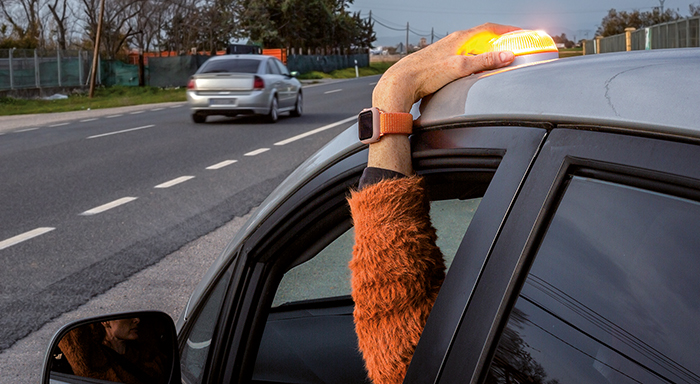
Tráfico is moving forward with plans to replace the warning triangles used to alert other road users when a vehicle breaks down with V16 emergency beacons. Triangles were introduced in July 1999 but this system is going to be modernized with a beacon that is placed on the roof of the vehicle and emits an orange warning light.
Why the Change?
Jorge Ordás, Tráfico’s General Deputy Director of Transportation and Technology explains that the warning triangles will be substituted for an alternative system primarily because of the number of fatalities on Spanish roads that have been recorded due to drivers exiting their vehicles to place or collect the triangles on the road. This raised a serious safety issue that needed to be addressed.
How Does the Beacon Work?
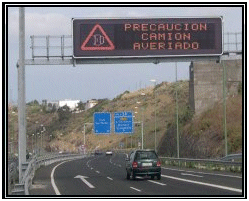
To alert other road users to our situation, the beacon is placed on the highest part of the vehicle to guarantee maximum visibility. The way the beacon is designed allows for the driver to place it on the roof of the vehicle without having to set foot outside, by simply putting your arm through the window and therefore lowering the risk level. The beacon has a double function in that every 100 seconds it sends a signal to DGT (Tráfico) Cloud 3.0 and this information is relayed to motorway overhead gantry signs (this function won’t be any good to use on Fuerteventura as we don’t have overhead signs but the rest of Spain will benefit from it) to confirm the location of the vehicle and advise other drivers as they approach the scene.
When are the Beacons Obligatory in Spain?
The switch from triangles to emergency beacons becomes obligatory from 1st January 2026, however, from 1st July 2021 drivers are permitted to use beacons with or without geopositioning location service. From 2026, the triangles will be obselete and as you can imagine fines will apply if drivers do not comply with the changes. From a safety point of view, it wouldn’t hurt to buy the beacon now for approximately 25 euros.
If you must get out of the vehicle, make sure it is done safely and only if there is a secure space off the road and always in the opposite direction to the flow of traffic. If a safe space is not available, drivers are urged to remain in their vehicles with their seat belts fastened until road assistance arrives to save the day.
PS: It sure feels good to write about something other than the pandemic again!

