
These past few days have been quite busy on the business owner front, whether it has been to do with Social Security or financial aid authorized by the Spanish Government, but I’m going to give you insights into what has been going on lately.

As you must be aware, Social Security increased monthly contributions on 30th October 2020 as per Royal Decree 28/2018, 28th December that outlined progressive increases from 2019 to 2021 that incorporate obligatory payment of Professional Accidents, Business Closure (Sole Trader Unemployment) and Professional Training which up until that point were voluntary.

Due to the pandemic, the annual increase, that usually takes place in January, was delayed until October. According to statistics, 77% of sole traders contribute the minimum base rate, which means an increase from 283,30 euros per month to 286,15 euros per month. The increase applied varies from approximately 2,84 euros to 12,12 euros depending on age and applicable base rate.

Tomorrow, Monday 30th November 2020, Social Security will implement two important matters in relation to governmental financial aid:

  1. Those who requested a continuance for sole trader financial aid will receive payment and this will extend until 31st January 2021. Depending on your circumstances, you will either receive 472 euros (50% of the base rate) or 661 euros (70% of the base rate). The number of applicants has almost doubled since the last count. In October 256.000 sole traders requested financial aid, however, it would seem that this has risen to around 500.000 beneficiaries.
  2. Those sole traders who requested deferment on their monthly contribution will begin to pay back their debt to Social Security from Monday 30th November 2020. At the start of the pandemic, the Government permitted this option to certain collectives to temporarily alleviate financial pressures by not charging fees for May, June and July, but now it is time to pay back the piper, so the back payments will be added onto the usual monthly contribution (a minimum of 572,30 euros). Statistics do show though that not many business owners requested this form of financial aid.

Although these measures have proved invaluable to those who have been affected economically by this health crisis, there is an outcry from those who feel that not enough is being done. Please take a read of the following article for more information, https://www.canaryadminservices.com/will-the-pandemic-restart-conversations-about-social-security-contributions/

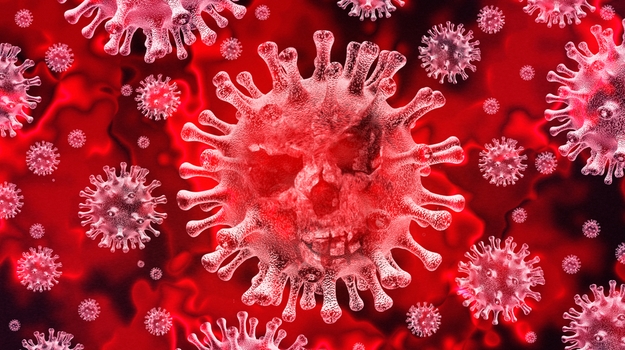
How has your first week of relative freedom gone? I imagine the majority of you feel relief now you can finally venture outside for some fresh air and real exercise. After a few days of mainly inputting accounts, I’m switching from numbers to letters with another update of the situation in Spain. President Pedro Sánchez confirmed yesterday afternoon (May 6th 2020) that the State of Emergency has been extended for the fourth time to midnight on 24th May 2020. This measure has been authorized by Congress for health, economic and social reasons.

Seven and a half weeks ago, the spread of the virus increased by 35% on a daily basis, but this has now reduced to 0,31% which is a remarkable improvement. This means the National Health System is no longer collapsed.

The reduced rate of contagion allows for Sánchez’s plan to de-escalate enforced limitations in stages so the “return to normal” can be done gradually. For these restrictions to be slowly lifted, it is important to point out that the State of Emergency must remain in effect, which is the constitutional tool that governs the country when pandemics or other health-related emergencies arise. With that in mind, it only seems logical to think this won’t be the last time it will be extended.

The one thing that worried me when I first heard chatter of lifting restrictions etc., was that it would be done abruptly which would completely invalidate everything we’ve been through and sacrificed since 15th May. Sánchez insists it would be a mistake to lift the State of Emergency without taking appropriate steps first to ensure our continued safety.

We’ve all heard about the four phases he intends to implement (I know I’m late to that party, but here goes anyway…):

PHASE ZERO: This phase began when children were able to outside for an hour a day and now adults can also enjoy certain freedom. It also includes the reopening of retail establishments (prior appointment) and limited restaurant service.

PHASE ONE: Reopening of other businesses under strict guidelines, except commercial centres to prevent crowds. Restaurants may open terraces with a 30% of maximum occupancy and hotels and touristic accommodation can begin to work (excluding communal areas). It may also see gyms begin to operate again under extreme hygienic conditions.

PHASE TWO: The interior space in restaurants may be used again with limited seating and the appropriate safety distance between them. The new school year will start in September generally speaking. Cinemas, theatres, auditoriums etc., can reopen to 30% of capacity. Open-air events can go ahead as long as there are less than 400 people. Religious centres must limit occupancy to 50%.

PHASE THREE: Movement in general will be more flexible, however, the use of face masks outside of the home and on public transport is recommended. Retail must limit capacity to 50% ensuring a minimum 2 metre saftey distance between people. Restaurants will have less restrictions also.

There is an expected minimum two-week period between phases as long as the virus does not progress and remains “under control” throughout Spanish territory.

Each Autonomous Region will have the ability to have input into the development of each phase and must inform the Central Government which territories will advance, measures to be adopted, analysis of the health system and any other relevant economic, social or movement related data. This week it emerged that this will also depend on the each regions capacity to install between 1,5 and 2 beds for each 10.000 inhabitants in the Intensive Care Unit within five days.

With that in mind, the President of the Canarian Government said yesterday, that “generally speaking”, the Canary Islands’ meet the criteria established by the Central Government to transition to Phase One, but further confirmation is required. We will have to see how well Fuerteventura fares. The islands carry out on average more than 2200 COVID-19 tests each day, and in the past few weeks no more than twelve new cases a day have been logged (some days no new cases).

Phase One does not mean we would be able to travel between islands because the territorial reference for each phase that must be reported on are individual islands, so data cannot be mixed in any way. He also spoke about the possibility of additional measures being implemented for reopening of commercial establishments that are not located in shopping centres. In any case, our situation in the Canaries is unique, because on the one part, we have been able to weather the pandemic better than the mainland because we are insular, but on the other hand, our main industry is tourism, so until borders are open, our options are limited. We will have to see how successful our representatives are at getting our unique circumstances across to the Central Government, although caution is still required despite the difficulties we are facing. It is a tough call!


Spain is on a preventative lockdown to help stop the rapid spread of the Coronavirus throughout the country. As the Canaries are part of Spain, all approved legislation applies to us too. I haven’t posted anything publically since we were officially put on lockdown at midnight on Saturday 14th March 2020 because my primary concern has been for my amazing clients and their businesses, so references to yesterday’s email etc is because of the information they were sent as matters were unfolding. Apologies by the way to my registered monthly clients because you may receive this information automatically again as suscribers to this blog (I will try to stop that from happening), but at the same time, I want to say how in awe I am of all of you because you are handling this extreme situation like troopers even though many of your businesses were the first to be affected by the lockdown. I am really proud to count you as clients and I wish you the very best as you navigate daily uncertainties about the future of your businesses while at the same time many of you are also looking after small children, elderly parents, siblings and dependents. It gives me a glimmer of hope…


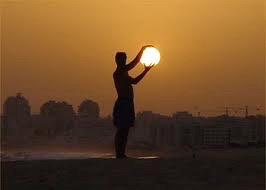
As crazy as the header sounds, it is true, in essence, the Spanish Government is holding the sun for ransom and I reported on this subject back in July 2013 when this topic first hit the media. At the time, a government official claimed when asked about the new draft of the decree that the goal is to “balance the electric system in a definitive way, to prevent new instabilities and guarantee the consumer’s electric supply at the lowest price possible and in a more transparent way”. These new measures would see a raise in tariffs (what has been called “sun tax”) for those who generate their own electricity at home despite efforts made in numerous countries to increase awareness for green power, not Spain however. This country’s officials prefer to penalize those who take the initiative to do something pro-environment and even go as far as taxing a source of energy that no one person, no institution, government nor monarchy has ownership of.


Bankia is once again in the news, this time fortunately, it is not requesting another bailout. The complete opposite is happening as in fact, the Spanish Government has begun to sell its shares in that bank as it struggles to remain solvent. The government used 18 billion Euros of EU funds to bailout the flagging bank and currently owns 68%. The idea is to sell up to 18% of its shares to private investors.
