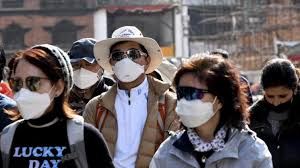
Today, and in another COVID-19 update, the Ministry of Health has published Order SND/422/2020, 19th May. This Health Order makes it obligatory to use face masks on the street, in open-air spaces and in any enclosed space of public use or that is located in public areas. This will only apply where it is not possible to maintain the two metre safety distance. The following exceptions apply:

  • Those who have respiratory difficulties that may be aggravated by the face mask
  • In cases where it is not recommended for justified health reasons, for incapacity or for those whose behaviour could be negatively affected (autism, down syndrome…)
  • When carrying out activities where use of the mask may be incompatible or counterproductive
  • For other justifiable reasons

The World Health Organization (WHO) said on 16th April that masks are necessary to continue with the de-escalation phases and to minimize risks in situations of potential contagion. The type of mask to use should preferably be hygiene surgical masks that cover the nose and mouth. Use of face masks is not obligatory for those under the age of 6.

This Order comes into effect from tomorrow, Thursday 21st May 2020 and is expected to continue until the end of the State of Emergency.

Stay safe everyone!


How has your first week of relative freedom gone? I imagine the majority of you feel relief now you can finally venture outside for some fresh air and real exercise. After a few days of mainly inputting accounts, I’m switching from numbers to letters with another update of the situation in Spain. President Pedro Sánchez confirmed yesterday afternoon (May 6th 2020) that the State of Emergency has been extended for the fourth time to midnight on 24th May 2020. This measure has been authorized by Congress for health, economic and social reasons.

Seven and a half weeks ago, the spread of the virus increased by 35% on a daily basis, but this has now reduced to 0,31% which is a remarkable improvement. This means the National Health System is no longer collapsed.

The reduced rate of contagion allows for Sánchez’s plan to de-escalate enforced limitations in stages so the “return to normal” can be done gradually. For these restrictions to be slowly lifted, it is important to point out that the State of Emergency must remain in effect, which is the constitutional tool that governs the country when pandemics or other health-related emergencies arise. With that in mind, it only seems logical to think this won’t be the last time it will be extended.

The one thing that worried me when I first heard chatter of lifting restrictions etc., was that it would be done abruptly which would completely invalidate everything we’ve been through and sacrificed since 15th May. Sánchez insists it would be a mistake to lift the State of Emergency without taking appropriate steps first to ensure our continued safety.

We’ve all heard about the four phases he intends to implement (I know I’m late to that party, but here goes anyway…):

PHASE ZERO: This phase began when children were able to outside for an hour a day and now adults can also enjoy certain freedom. It also includes the reopening of retail establishments (prior appointment) and limited restaurant service.

PHASE ONE: Reopening of other businesses under strict guidelines, except commercial centres to prevent crowds. Restaurants may open terraces with a 30% of maximum occupancy and hotels and touristic accommodation can begin to work (excluding communal areas). It may also see gyms begin to operate again under extreme hygienic conditions.

PHASE TWO: The interior space in restaurants may be used again with limited seating and the appropriate safety distance between them. The new school year will start in September generally speaking. Cinemas, theatres, auditoriums etc., can reopen to 30% of capacity. Open-air events can go ahead as long as there are less than 400 people. Religious centres must limit occupancy to 50%.

PHASE THREE: Movement in general will be more flexible, however, the use of face masks outside of the home and on public transport is recommended. Retail must limit capacity to 50% ensuring a minimum 2 metre saftey distance between people. Restaurants will have less restrictions also.

There is an expected minimum two-week period between phases as long as the virus does not progress and remains “under control” throughout Spanish territory.

Each Autonomous Region will have the ability to have input into the development of each phase and must inform the Central Government which territories will advance, measures to be adopted, analysis of the health system and any other relevant economic, social or movement related data. This week it emerged that this will also depend on the each regions capacity to install between 1,5 and 2 beds for each 10.000 inhabitants in the Intensive Care Unit within five days.

With that in mind, the President of the Canarian Government said yesterday, that “generally speaking”, the Canary Islands’ meet the criteria established by the Central Government to transition to Phase One, but further confirmation is required. We will have to see how well Fuerteventura fares. The islands carry out on average more than 2200 COVID-19 tests each day, and in the past few weeks no more than twelve new cases a day have been logged (some days no new cases).

Phase One does not mean we would be able to travel between islands because the territorial reference for each phase that must be reported on are individual islands, so data cannot be mixed in any way. He also spoke about the possibility of additional measures being implemented for reopening of commercial establishments that are not located in shopping centres. In any case, our situation in the Canaries is unique, because on the one part, we have been able to weather the pandemic better than the mainland because we are insular, but on the other hand, our main industry is tourism, so until borders are open, our options are limited. We will have to see how successful our representatives are at getting our unique circumstances across to the Central Government, although caution is still required despite the difficulties we are facing. It is a tough call!
The Cabinet approved last Tuesday 28th April 2020 a transitional plan to a “new normal”, which will establish safety parameters to gradually lift restrictions. These new measures will be adapted to and will depend on how public health data evolves and how they are affected by restrictions being lifted.

Based on what I’ve read briefly on social media, there is a lot of confusion about the changes. I would like to clarify that TWO Orders were issued today, (1) applies ONLY to the islands of Formentera, la Gomera, el Hierro and la Graciosa and (2) to all other regions of Spain. Some people have read or heard about the restrictions that were lifted on these specific islands and thought they applied to everyone which is not the case.

Let’s go through Order SND388/2020, 3rd May 2020, starting with Retail Commercial Premises and Professional Services:

  1. All establishments, retail commercial premises and professional services whose activities were suspended after the State of Emergency was declared, with the exception of those premises that are over 400m2 as well as those within commercial centres, or within commercial centres where the establishment does not have a direct and independent access from the exterior of the building and as long as the following requirements are fulfilled: (a) An appointment system to guarantee only one customer per employee, however, a waiting area is not permitted in the interior of the commercial premise (b) Individual attention must be guaranteed each customer with the corresponding physical separation between them, and if this is not possible, counters or screens must be installed to accomplish this (c) A preferential schedule for over 65s must be established to coincide with the hours they are permitted to go outside
  2. The measures detailed in this Order do not apply to those business activities and establishments that were permitted to open in line with the initial decree, as these may remain open under the same conditions from the start of the State of Emergency
  3. All the establishments may put a collection system in place for customers to pick up their items, as long as this is staged to prevent groups of people gathering in and around the premises
  4. Journeying to and from the establishments may only be done within the municipality of residence, unless the service or product cannot be found there
  5. Establishments that open to the public must be cleaned and disinfected at least twice a day, paying special attention to most-used surfaces, such as door handles, counters, furniture, bannisters, dispensers, floors, phones, clothes hangers, trolleys, baskets, taps and similar objects. The surfaces must always be cleaned at theend of the day. Disinfectants such as diluted bleach (1:50) must be used or products approved by the Health Ministry. After each clean, the materials and equipment used for personal protection must be disposed of safely, after which hands must be properly washed. A midday clean (or part-way through the work day) is recommended. Work stations must also be cleaned and disinfected betwen shift changes, paying special attention to most used surfaces and shared equipment
  6. Where there is more than one employee seeing to customers, the above cleaning measures must be extended to shared areas such as changing changing rooms, locker rooms, bathrooms, kitchens and rest areas
  7. Uniforms (or clothes worn to work if there is no uniform) msut be washed daily on cycles between 60 and 90 degrees
  8. Use of the establishments bathroom facilities is strictly prohibited, unless essential. After its use, they must be cleaned and disinfected IMMEDIATELY (toilet basin, sink, dispensers, taps, door handles…)
  9. All establishments and premises must have bins available (preferably with a pedal actioned lid) to deposit tissues and any other disposable material. These bins must be cleaned frequently
  10. Employees who are self-isolating due to contracting COVID-19, o those who are under house quarantine due to coming into contact with someone who either has the virus or is displaying symptoms, are not permitted to return to work
  11. The business owner is responsible for ensuring safety measures are put into place to prevent furher contagion and must make sure employees are equipped with protective gear and that hand gel (as approved by the Health Ministry) is available at all times. The use of face masks will be obligatory when saftey distances of approximately 2 metres between staff and customers or between employees cannot be guaranteed. If there are security screens installed, this distance can be reduced to 1 metre. All personnel must be properly informed and instructed about the correct use of protective gear and procedures. The same applies for third-party employees that access the premises such as delivery services
  12. Those companies that employ fingerprint devices to record when staff enter and leave the work place, must use an alternative system
  13. Internal procedures, rotas, use of equipment etc., must be modified to adhere to new protocols
  14. Some services such as hairdressers, beauty salons, physiotherapists and similar, cannot by nature maintain these safety distances, so they must make use of personal protective gear to ensure they are protected as well as the customer. A distance of at least 2 metres however must be maintained between each customer
  15. The safety distances apply in common areas for employees (changing room, locker room, bathroom, break room, dining room, kitchen, bathroom etc)
  16. If an employee begins to display COVID-19 related symptoms, the contact line for the Autonomous Region must be called and the employee must abandon the work place immediately, and must not be permitted to return until their medical status has been evaluated by a medic
  17. Customers must not linger in establishments
  18. A single employee is not permitted to simultaneously see to more than one customer at a time
  19. Establishments must provide hand dispensers for customers and these must be placed at the entrance and be maintained for proper and hygienic use
  20. Customers that go to establishments that have some type of autoservice are not permitted to use the equipment themselves. Instead, a member of staff must opérate the machines
  21. Product samples may not be used
  22. Clothing establishments must ensure the changing cubicles are used by one person at a time and they msut be cleaned and disinfected after each use. If a customer tries on items of clothing that they do not purchase, these items must be sanitized before being returned to the rack for another customer to try (In any case, I personally recommend washing any new items before storing them at home or wearing them, especially now)

Moving onto the Hospitality and Restaurant Sector:

  1. Until now, these activities have only been permitted to operate as a delivery service, but now customers may phone ahead and collect their order from the establishment
  2. No food may be consumed onsite
  3. A preferential delivery service may be provided for over 65s, dependents or other vulnerable persons
  4. When a customer wishes to pick up their order, they must either phone ahead or use an alternative no contact system. The establishment is responsible for advising customers of the pick-up time to prevent unnecessary groups of people in or around the establishment. An area must be set-up and clearly marked as the space where payment must be made and food collected. The necessary safety distances must be ensured or counters and screens installed
  5. The establishments may only remain open to the public during the times when food can be collected
  6. Hand sanitizer must be made available to customers upon entering the premises
  7. A bin with a foot pedal actioned lid must be available upon the customer leaving the premises
  8. Customers may not remain in the establishment longer than necessary to pay for and collect their orders
  9. There must be clearly marked areas in those places that allow for more than one customer to be served at a time to ensure safety distances are visible. This can be done by placing tape on the floor, creating boundaries with some type of marker or signs. In any case, a single worker is not permitted to serve more than one customer at a time
  10. If more than one customer cannot be served at the same time (if there are insufficient employees or maneuverability within the premise), access must be done individually unless an adult is being accompanied by somebody with a disability, a minor or a dependent

These are the measures outlined in the Order published on today’s date, that will come into effect from tomorrow Monday 4th May 2020, to allow those business activities that had been banned to operate once again under these limitations for health and safety purposes. If we all adhere to them, the quicker we will hopefully return to normal.

On another and very important note, the Government has issued assurances that those business who have employees on suspended contracts (ERTE) or those sole traders who have applied for or who are currently receiving benefits, will continue to do so even if they resume their activity based on this Order. The reason for this is because these benefits are to remain until the State of Emergency is lifted completely, but at present, only certain restrictions have been removed, but the State of Emergency itself is still in effect. I know this would have been a cause of concern for many of you, and I hope that the majority can reopen under these conditions. As you know, I normally post on these matters once the official decree or order has been published, but since this is an important issue, I felt it should be mentioned, however, when further information is released about retaining the rights to benefits etc., you can read about it here, so subscribe to my blog at www.canaryadminservices.com (fill you details out in the footer of any of the pages you access on my site and begin receiving email notifications every time I post).

And tomorrow, May the Fourth Be With You!

Sorry, I couldn’t resist some Star Wars humour here!

Spain is on a preventative lockdown to help stop the rapid spread of the Coronavirus throughout the country. As the Canaries are part of Spain, all approved legislation applies to us too. I haven’t posted anything publically since we were officially put on lockdown at midnight on Saturday 14th March 2020 because my primary concern has been for my amazing clients and their businesses, so references to yesterday’s email etc is because of the information they were sent as matters were unfolding. Apologies by the way to my registered monthly clients because you may receive this information automatically again as suscribers to this blog (I will try to stop that from happening), but at the same time, I want to say how in awe I am of all of you because you are handling this extreme situation like troopers even though many of your businesses were the first to be affected by the lockdown. I am really proud to count you as clients and I wish you the very best as you navigate daily uncertainties about the future of your businesses while at the same time many of you are also looking after small children, elderly parents, siblings and dependents. It gives me a glimmer of hope…