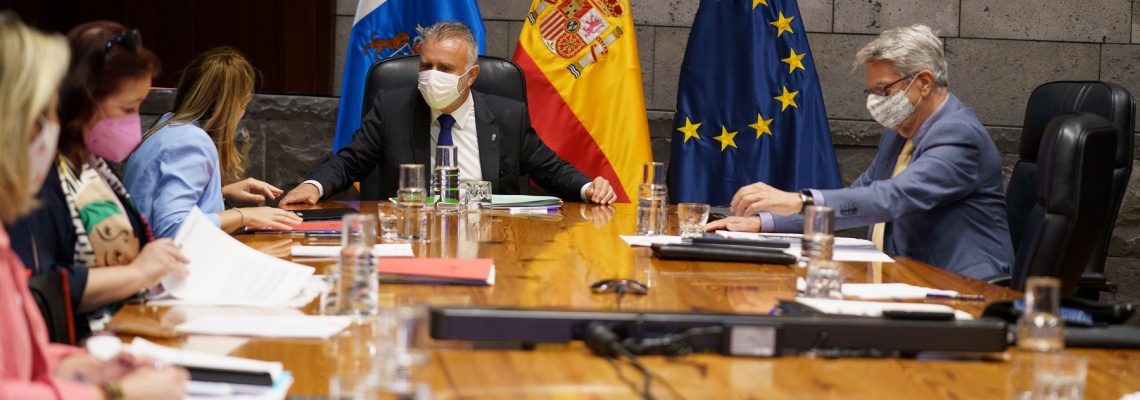
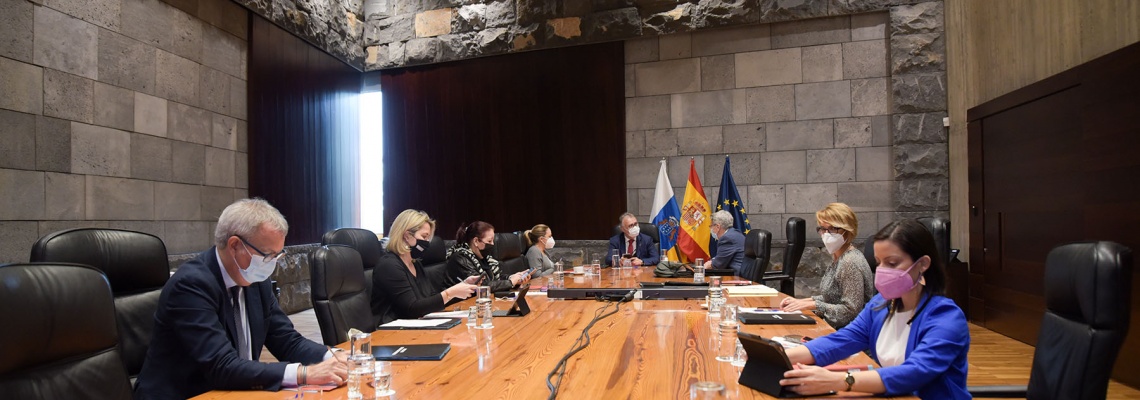
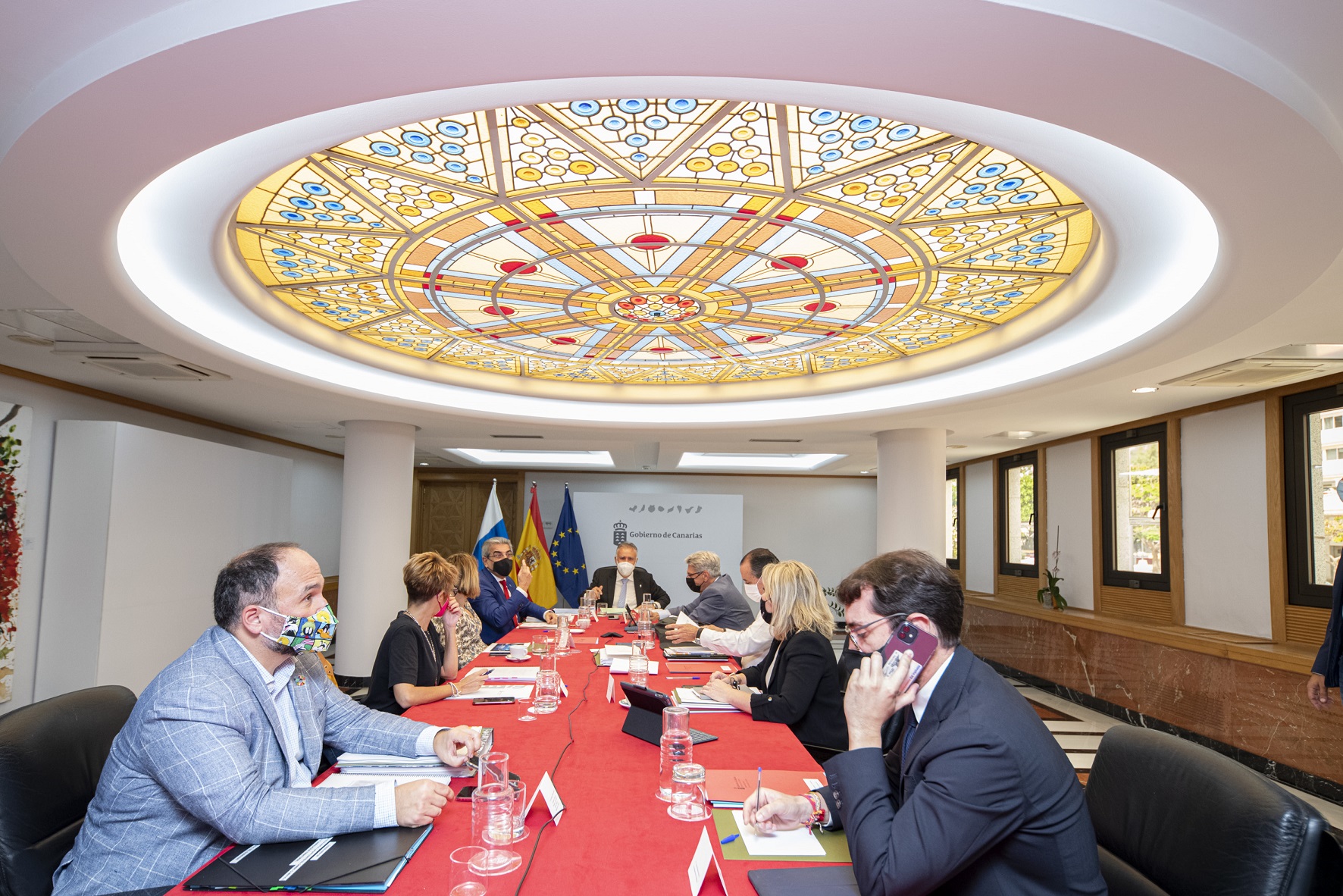
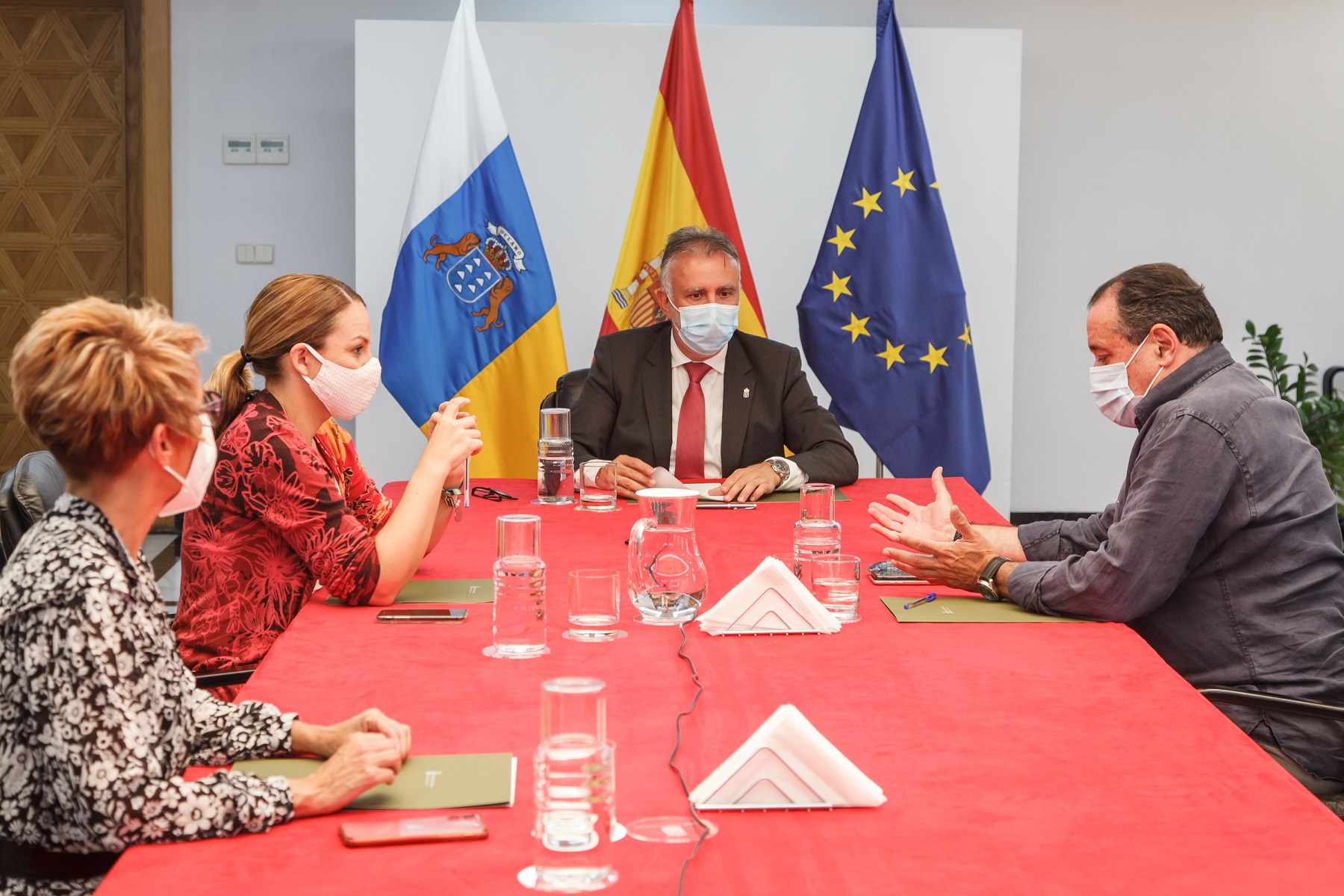
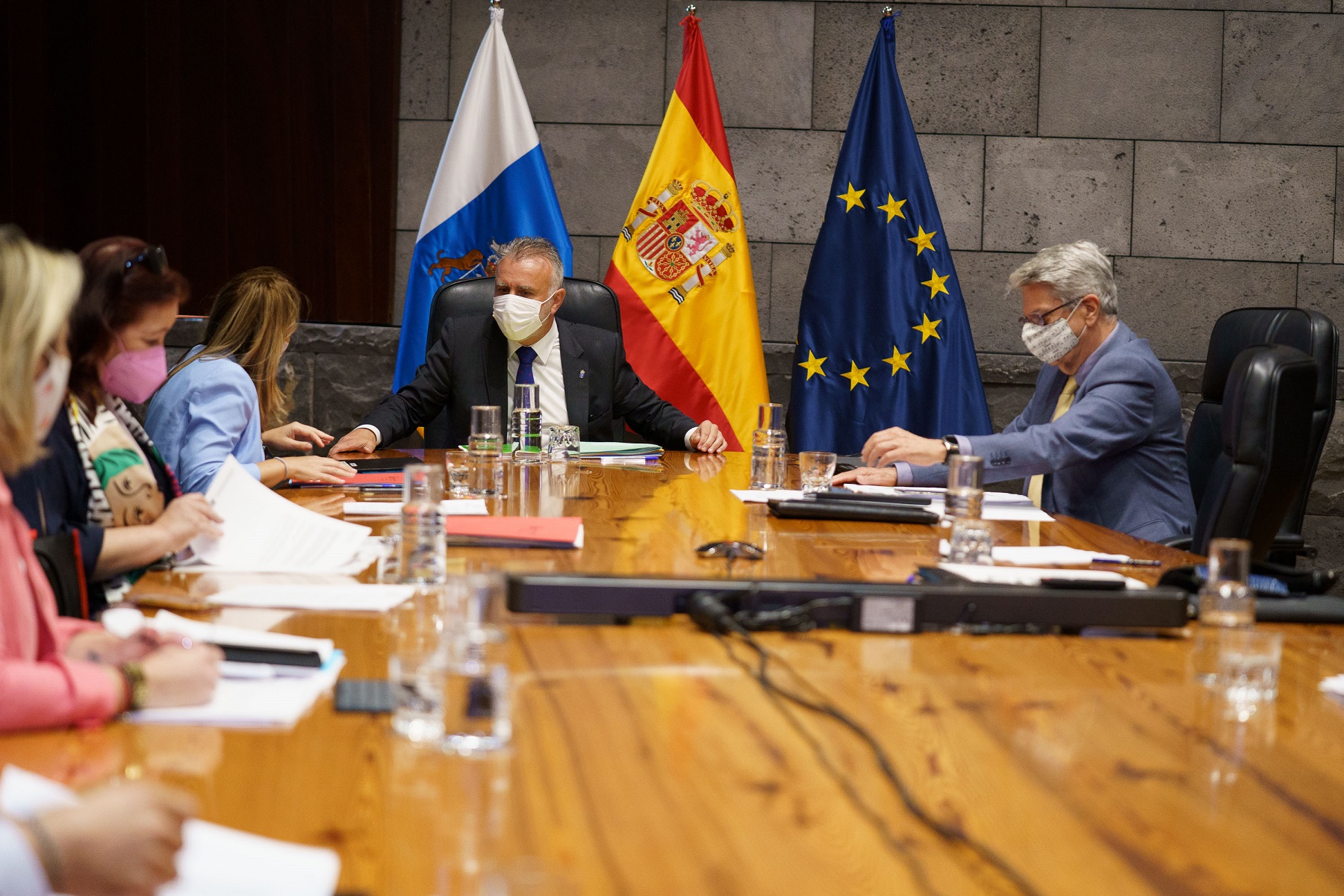
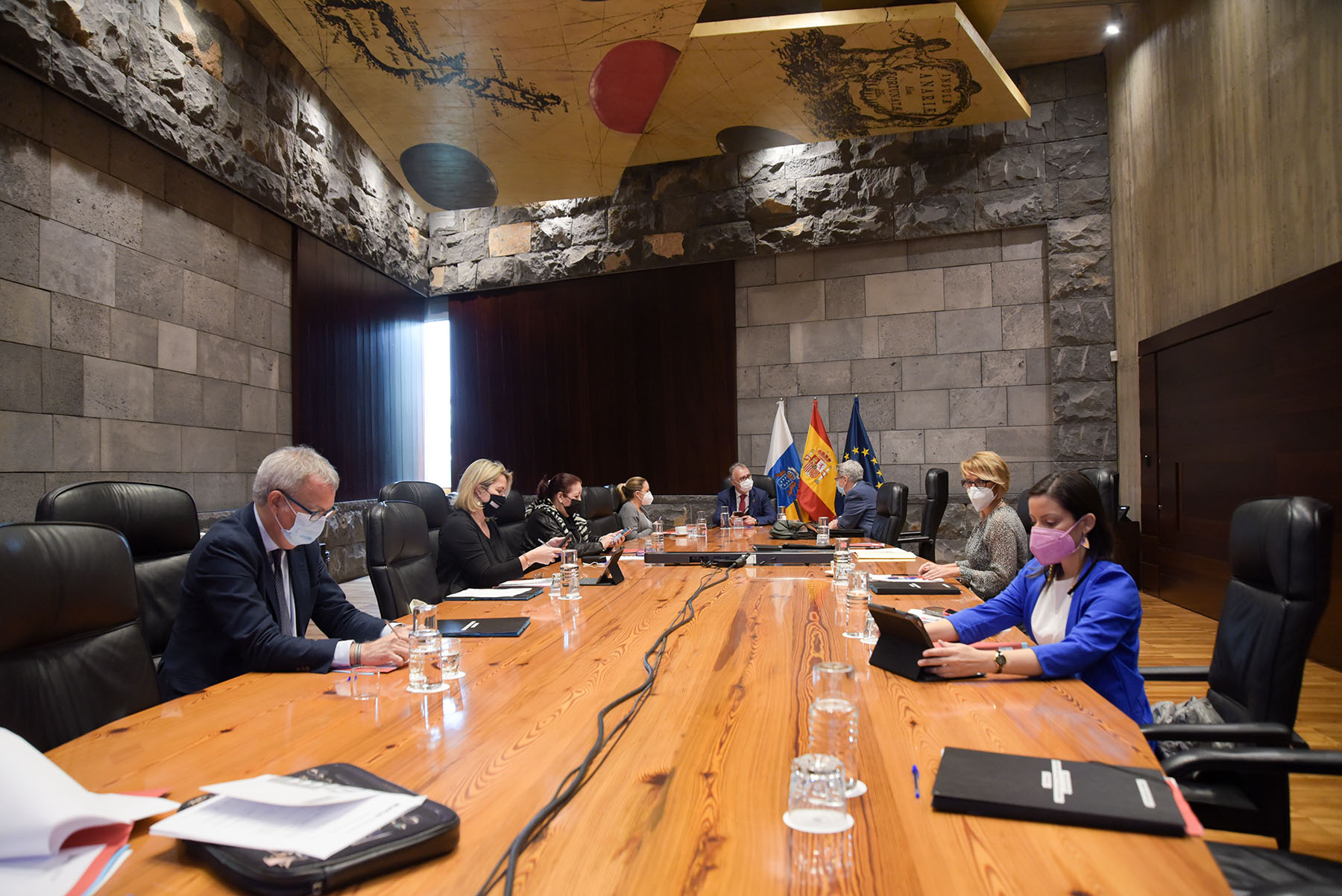
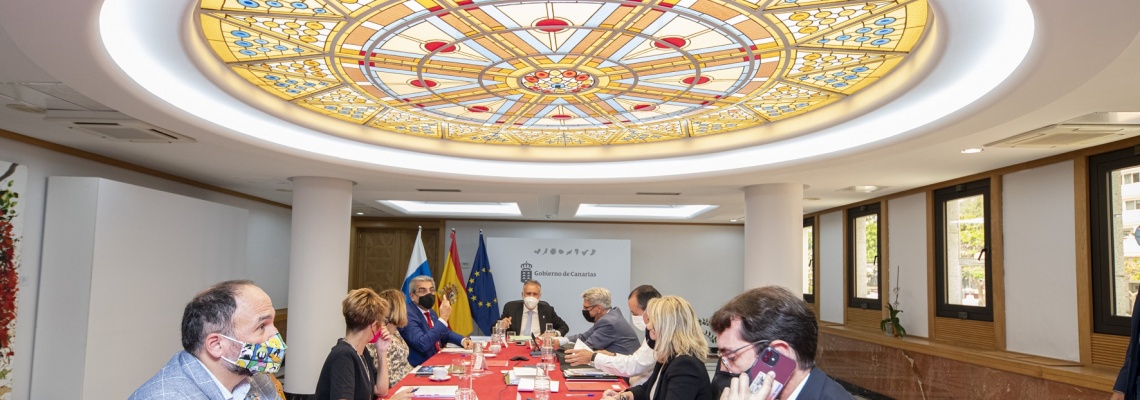
On Thursday 10th June 2021, the Canarian Government finally approved longer opening hours for Nightclubs, Cocktail Bars and Karoke establishments on islands in Alert Level I from last night.

These establishments may stay open until 2am if they comply with additional measures such as limited occupancy, adequate ventilation (inside and outside) and register customer contact information to allow the authorities to track possible contagion for at least thirty days. The islands that are currently at Alert Level I are Fuerteventura, Gran Canaria, Fuerteventura, La Palma, La Gomera and El Hierro.

Maximum occupancy per table is fixed at 10 persons (exterior) and 4 persons (interior). All food and drink must be consumed at the table with customers correctly seated and maintaining the 2m security distance. Masks must be used at all times except when eating or drinking.

Since dancing is still not on the approved list of activities, the establishments must either tape off the dance floor or place tables on it without exceeding maximum occupancy.

The good news is that other establishments in the hospitality sector may remain open until 2am as well if their opening licence allows.

Other social activities such as leisure and sporting events with less than 750 in attendance may also gather without the need to request prior authorization from the Canarian Health Services.

These new measures will be published in the Canarian Bulletin and it looks as though more restrictions will be lifted on 18th June 2021. Hopefully these are positive steps toward this “new normal” we keep hearing about.


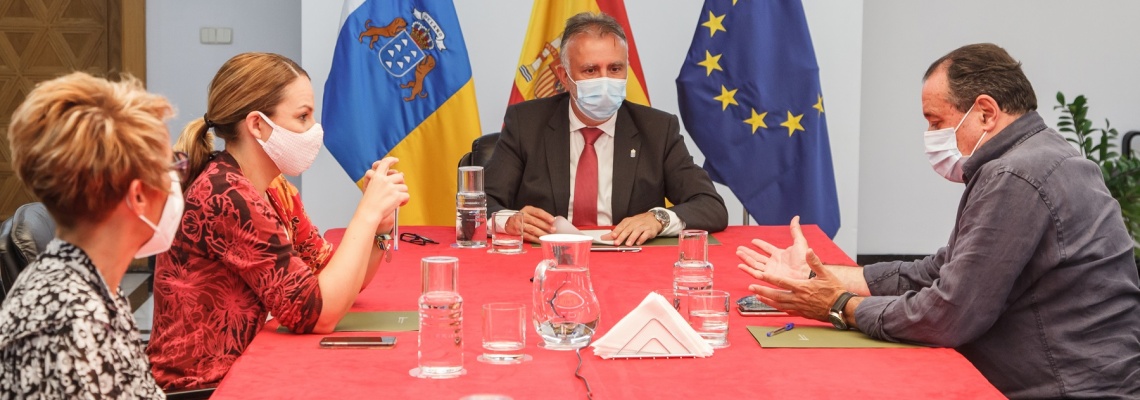
The President of the Canarian Government, Ángel Victor Torres took the lead in an extraordinary plenary session at the beginning of the week after the State of Alarm in Spain officially came to an end. National regulations indicate that each Autonomous Region may implement restrictions they see fit to continue to contain the virus in the best way possible and Torres decided to maintain current restrictions, however, this is being met with some resistance.

Maintaining current restrictions means that the hospitality sector and leisure activities will continue with time and maximum occupancy limitations. This also means that public and private gatherings are restricted in the number of persons who can attend, social distancing, the use of masks, obligatory PCR tests to stay at hotels, limited use of gyms and all other previous measures remain in place.

The reason why I have delayed writing on this is because there was some controversy surrounding these restrictions post-State of Alarm from the Canarian High Court of Justice so I was awaiting new developments during the week but so far there haven’t been any. Instead, the Canarian Government had to file an appeal this week to proceed with this course of action with data provided by the Public Health Department to back up their motives for wanting to enforce restrictions.

Although curfew has been lifted, all other counter COVID measures remain until the Canarian High Court of Justice gives a definitive response. The Canarian Government urges us to be mindful of complying with regulations as before especially regarding closing times of restaurants and bars as well as not forming large gathering in parks and public spaces well into the night. Even though technically we are free to be out and about at night since there is no curfew, Public Health considers it vital to limit these events as much as possible especially since there are no islands currently in Alert Levels 3 and 4.


On Friday 23rd April, the Canarian Government published its latest Resolution that outlines updated measures to prevent the spread of COVID-19 on the islands and states key factors as we hope to transition to a “new normal” once the State of Alarm ends. This article covers the main points of that Resolution and hopefully very clearly…

The Resolution was published on Friday afternoon in Boletín Oficial de Canarias número 83, but a press release announced some of the changes ahead of time that caused some furor that has been expressed in the media, especially in relation to obligations the hospitality sector now has to comply with but we’ll get into that a bit later. The basis of the plenary session held by the Government on the 22nd April is Royal Decree-Law 21/2020, 9th June that allows Autonomous Regions to maintain and establish their own protocols. Let’s review first the General Conditions:

OBLIGATORY USE OF MASKS

  1. All persons age 6 and over are obligated to wear masks. The recommendation is for us to wear reusable sanitary masks, however, exhalation valve masks are not permitted except for professions that may require them.
  2. Masks must be worn on public streets, open-air spaces and in any enclosed public area or open to the public. In all scenarios, the 1,5 metre safety distance must be maintained.
  3. In the workplace, it is up to each company’s health and safetey technician to evaluate internal protocols to ensure the safetey of all employees and clients.
  4. In schools and centres of education including universities
  5. In sport’s centres and installations
  6. On public transport
  7. In hospitals, clinics, health centres and similar
  8. The correct use of masks must be observed, i.e., they must completely cover the nose and mouth at all times and they must fit properly across the nose and chin to prevent respiratory secretions from escaping
  9. The owners of the establishments and spaces where people can gather must guarantee these rules are followed

Exceptions to the above

  1. Persons who present with respiratory afflictions that may be worsened by the use of masks and persons who are unable to remove their masks themselves due to disability or dependence
  2. Force majeure, unavoidable circumstances
  3. Individual open-air sport activities as long as a 2 metre safety distance between other people can be guaranteed at all times
  4. In open-air sports installations except when the island is at Alert Level 4. This applies only when physical activity is being practiced with a permanent 2 metre distance between each person. During professional training and competitions
  5. In hospitality establishments, i.e., bars, restaurants and similar and only in the moment when food and drink is being consumed
  6. In the great outdoors outside of populated areas if a 2 metre safety distance can be maintained between anybody else who may be out there as well
  7. On beaches and at pools but only when bathing or practicing water sports and professional activities in the water. This only applies though if people remain in the same spot and guarantee a 2 metre security distance between persons who do not cohabitate
  8. When smoking, eating or drinking but only if the person remains in the same spot, i.e., no smoking and walking down the street at the same time and ensuring the safety distance from others

CURFEW

  1. Alert Level I: Between 12am (midnight) and 6am
  2. Alert Level II: Between 11pm and 6am
  3. Alert Level III: Between 11pm and 6am
  4. Alert Level IV: Between 10pm and 6am

Curfew does not affect the following activities

  1. Purchase of medication and sanitary products at chemists
  2. Going to hospitals, clinics and health centres
  3. Going to veterinary clinics for emergent treatment
  4. Fulfillment of work (as an employee), professional or legal commitments
  5. Returning to the primary residence after any of the above activities
  6. To tend to the elderly, minors, dependents, persons with disabilities or the particularly vunerable
  7. Force majeure, unavoidable circumstances
  8. Filling up at petrol stations when required to carry out any of the above situations
  9. To tend to the care of domestic or farm animals

HOSPITALITY SECTOR

Establishments such as restaurants, bars, cafes, terraces and ‘chiringuitos’ must guarantee the 2 metre safety distance at all times bettween chairs set at different tables or groups of tables and people sat at the bar

Each table or group of tables must be set to accommodate the number of people that may occupy them and where possible, chairs should be positioned in a zig-zag pattern to avoid patrons being sat face to face and allows for maximum distance between them. The spaces assigned for bar seating must be clearly marked

The following requirements regarding maximum occupancy and closing times mustbe observed as per the alert levels at any given moment:

  • Alert Level I: 75% of maximum occupancy inside. 10 persons per table or group of tables outside. 6 persons per table or group of tables inside. 4 at the bar. Complete closing is before 12am (midnight)
  • Alert Level II: 75% maximum occupany on open-air terraces and 50% inside. 6 persons per table or group of tables outside. 4 persons per table or group of tables inside. 2 at the bar. Buffets are not permitted inside. Complete closing is before 11pm. To comply with curfew regulations, pick-up at the establishment is permitted before 11pm
  • Alert Level III: 50% maximum occupany on open-air terraces. Inside service is prohibited as well as loitering except to use the bathroom or to pick-up orders. 4 persons per table or group of tables and nobody may sit at the bar. Buffet service is prohibited inside. Complete closing is before 11pm. To comply with curfew regulations, pick-up at the establishment is permitted before 11pm
  • Alert Level IV: The same as Alert Level III, except complete closing which must be before 6pm. To comply with curfew regulations, pick-up at the establishment is permitted before 10pm

Delivery service at all alert levels can be done until midnight. The use of the establishment’s interior and closing times do not affect those facilities within health centres, the workplace (employees only), hotels (for exclusive use of guests), education centres that may keep their regular hours, although maximum occupancy is reduced to 33%.

Other Requirements

  1. Traditional menus must not be used and establishments must instead opt for electronic devices the servers must use, blackboards, signs, QR and similar alternatives
  2. Elements such as crockery, glassware, silverware, tablecloths etc ust be stored in a closed cupboard or way from customers
  3. Servillete holders, vinegar and oil bottles, salt and pepper shakers etc must not be used
  4. Smoking on terraces and other dependent open-air spaces of the establishment is prohibited
  5. Correct interior ventilation must be a priority
  6. Customers may not occupy a table unles directed by a member of staff because the tables, chairs etc must be properly disinfected after each use. Customers must remain seated at their table and limit any movement around the establishment as much as possible
  7. Buffets must be monitored to ensure proper use of masks, hand sanitization and non-contamination of food products
  8. Pick-up and delivery services are permitted, observing safety distances and other preventative measures at all times
  9. Food pick-up services must be properly organized so that the customer orders by phone or similar system, the establishment will set the collect time to avoid unneccesary crowding. If the establishment has a drive through, the order can be taken from the vehicle as normal

Customer Log

So this is the star of this article… over the weekend, you may have been surprised if the establishment asked for your details, but this is in line with new regulations, although many establishments are unaware of this obligation because as mentioned at the beginning, this resolution was published on Friday afternoon and came into immediate effect!

From now on and until further notice, when customers are seated inside the establishment, their full names, D.N.I. or similar ID number, phone number, date and time of service must be logged. This measure is to track people who may have come into contact with someone who is later diagnosed with COVID-19; this way, the Health Department (Sanidad) can request the form from the establishment and call those who were there around the same time as the infected person. Establishments are required to keep these logs for one month after the log date for Health Inspectors to examine if necessary.

According to the Resolution, this only applies to at alert levels 1 and 2 because interior seating is not permitted at the higher levels and it would seem it also applies if a customer merely goes inside to use the bathroom facilities. There are queries of course about the open-air aspect because if the establishment’s exterior terrace is partially covered or has walls on either side, in theory, the customer’s details must also be taken. This observation is taken from previous decrees regarding the definition of “outside terrace” so if we apply the same principal, it could actually be considered an interior space. To be on the safe side, my recommendation would be to take customer details in this scenario as well.

A member of staff must take these details down on a form and the establishment must not allow customers access to the forms at all for data protection purposes. My affected clients received a template of this form on Saturday in order to record the obligatory information but you can create your own as long as it contains the data stipulated in the Resolution. I also advise the logs are kept in a folder (not see through) and kept out of sight for data protection reasons.

As you can imagine, this customer log has caused outrage within the hospitality sector, the most affected group since the pandemic began more than a year ago. Associations have called out the additional complications this supposes for an already struggling sector especially those that serve large numbers a day or provide fast-food services. They also mention the fact there is little information about how to apply this requirement and no official template was provided. The other inconvenience is to do with data protection laws; although all establishments should already be registered at the Spanish Data Protection Agency, they open themselves up to exorbitant fines if they do not process the logs correctly (see my above suggestions on this point). Take extra caution to comply with data protection regulations.


After the fiasco that was this week in La Oliva after our Mayor, Pilar González Segura issued an authorized increase from alert level II to level III of the municipality only to revoke it a day and a half later, there are more changes to the island’s status, only this time from the correct source.

Following on from the temporary measures decreed throughout the Canary Islands last week, yesterday, Fuerteventura has officially gone from Alert Level I to Level II due to increased cases that are no doubt a result from illegal mass gatherings and parties since Christmas and especially over New Year’s where standard security measures have not been properly observed.

A Plenary Session of the Canarian Government was held on Thursday 14th January 2021 to amend the alert levels of Lanzarote (increased to Level III), Fuerteventura (increased to Level II) and La Gomera (reduced to Level I) and came into effect yesterday, Friday 15th January until Thursday 28th January inclusive as can be seen on the released Announcement.

Restrictions for Alert Level II are:

  • Curfew: Freedom of movement is limited between 11pm and 6am every day
  • Limitations of groups of people in public and private areas: This is restricted to a maximum of FOUR persons except in the cases of co-habitants. If the group is a mixture of both co-habitants and non co-habitants, the maximum is still FOUR.
  • Specific measures for the Hotel and Restaurant Sector (terraces, bars and cafes): The maximum number of persons permitted per table is reduced from six to FOUR and the establishment must close to the public by 11pm. Activities that do not allow the required 2 metre safety distance are not permitted in terraces or other open-air spaces attached to the establishment, i.e., dancing, karaoke and similar
  • Sport Activities: Group or team sports practiced in indoor installations and sports centres that do not allow a permanent safety distance of 2 metres between persons is restricted to a maximum of FOUR persons per group including the instructor. In open-air areas, team sports that do not guarantee a permanent safety distance between participants at all times are not permitted. Group activities where it is not possible to maintain a permanent 2 metre security distance are restricted to a maximum of FOUR persons per group including the instructor (Personal Note: This last part for open-air activities seems contradictory because it is either not permitted or restricted so use discretion here)
  • Hospitals and Public Health Centres: Visitation is limited and must be supervised by health care specialists within the centres. Proper clinical face masks must be used otherwise entry will be refused.
  • Public Transport: In regular public road transport, the maximum capacity has been reduced to 50%. Police forces will be extra vigilant during peak times/ rush hour to prevent crowds from gathering at bus stops etc., and request only essential travel at these times. The frequency of bus routes will be increased and as before, food and drink may not be consumed on board and masks must be used correctly (not under the nose or chin)

These measures will be reviewed again around 28th January to see whether they have been successful or not and if the number of cases decrease, Fuerteventura may return to Alert Level I.

Personally, I am not one for checking the daily statistics of the Canary Islands as I find it too depressing to be so immersed in everything COVID-19, but since we are on the subject, the latest report of the last 24 hours shows the following:

There have been 368 new cases which takes the total number of accumulated cases in the Canary Islands to 30.946 of which there are 7.825 active cases (55 remain in Intensive Care; 300 are hospitalized and the remainder are quarantining at home). There have been four deaths (two males from Tenerife and two from Gran Canaria) aged between 49 and 82 and all with pre-existing medical conditions.
As has become customary each week, the Canarian Government held a Special Session yesterday to discuss and agree on additional measures to combat the COVID-19 health crisis. This has come about because the Public Health Directorate released updated data on the current situation on the islands on the 19th August 2020.

As a result, some of the regulations approved last week have been amended in the following way:

MASS EVENTS. Prior to organizing any type of event where crowds are expected to gather, the health authorities must carry out a risk assessment to determine necessary precautions. The promotors or organizers of these events must include a Contagion Prevention Plan when submitting permission to hole said event. This also means that any event of these characteristics must be approved by the maximum health authority of the Autonomous Region.

HOSPITALITY SECTOR. This sector which includes restaurants, bars, bar-cafeterias, terraces, beach-front premises and similar, must abide by the 1,5 metre safety distance between tables or groups of tables. The same applies to customers seated at the bar. The maximum occupation per table or group of tables is set at TEN PEOPLE, regardless of whether the seating area is interior or exterior. This hasn’t changed from regulations stipulated last week, but they have added that the tables must be arranged in such a way to allow for the 1,5 metre safety distance between customers seated there. The same precautions that were implemented during the de-escalation phase of the health crisis have returned or are being reiterated, namely:

  • Instead of handing menus to customers, these establishments must make use of electronic displays, blackboards (is that politically correct nowadays??!), signs, QR and other similar methods
  • Auxiliary elements such as crockery, glassware, cutlery, table cloths, bread baskets etc., must be stored in closed units and if this is not possible, they must be stored away from passages frequented by customers and employees
  • Self-service items such as servillete holders, olive oil and vinegar containers, salt and pepper shakers etc must be removed and replaced by individual sachets or by request from the client
  • All decorations must be removed from tables
  • Customers may not sit down at a table unless a staff member indicates the table is ready, i.e, it has already been cleaned and desinfected
  • All establishments must be closed by 1am and new customers may not be admitted from midnight

NIGHTCLUBS: These types of venues (discos, dance halls and bars where only drinks are served) must remain closed whether these are with or without live entertainment. I imagine this is a direct result of recent outbreaks allegedly caused by people frequenting these establishments and not complying with the mandatory safety distance between people.

NURSING HOMES: Coronavirus testing must be carried out on any new residents at least 72 hours before arrival. The same tests must be carried out on new staff members or existing employees when they return from holidays. Visits will be limited to one person per resident for a maximum of one hour a day. Any visits must be staggered throughout the day to prevent gatherings of people. These measures may be lifted when the resident in question is in the last stages of their life

Remember that all other regulations approved last week are still in effect, especially concerning the use of face masks and hand sanitizer. This information has been taken from Resolución 20 August 2020 that you can also read for yourself. Stay safe everyone and happy weekend 🙂