
As has become customary each week, the Canarian Government held a Special Session yesterday to discuss and agree on additional measures to combat the COVID-19 health crisis. This has come about because the Public Health Directorate released updated data on the current situation on the islands on the 19th August 2020.

As a result, some of the regulations approved last week have been amended in the following way:

MASS EVENTS. Prior to organizing any type of event where crowds are expected to gather, the health authorities must carry out a risk assessment to determine necessary precautions. The promotors or organizers of these events must include a Contagion Prevention Plan when submitting permission to hole said event. This also means that any event of these characteristics must be approved by the maximum health authority of the Autonomous Region.

HOSPITALITY SECTOR. This sector which includes restaurants, bars, bar-cafeterias, terraces, beach-front premises and similar, must abide by the 1,5 metre safety distance between tables or groups of tables. The same applies to customers seated at the bar. The maximum occupation per table or group of tables is set at TEN PEOPLE, regardless of whether the seating area is interior or exterior. This hasn’t changed from regulations stipulated last week, but they have added that the tables must be arranged in such a way to allow for the 1,5 metre safety distance between customers seated there. The same precautions that were implemented during the de-escalation phase of the health crisis have returned or are being reiterated, namely:

  • Instead of handing menus to customers, these establishments must make use of electronic displays, blackboards (is that politically correct nowadays??!), signs, QR and other similar methods
  • Auxiliary elements such as crockery, glassware, cutlery, table cloths, bread baskets etc., must be stored in closed units and if this is not possible, they must be stored away from passages frequented by customers and employees
  • Self-service items such as servillete holders, olive oil and vinegar containers, salt and pepper shakers etc must be removed and replaced by individual sachets or by request from the client
  • All decorations must be removed from tables
  • Customers may not sit down at a table unless a staff member indicates the table is ready, i.e, it has already been cleaned and desinfected
  • All establishments must be closed by 1am and new customers may not be admitted from midnight

NIGHTCLUBS: These types of venues (discos, dance halls and bars where only drinks are served) must remain closed whether these are with or without live entertainment. I imagine this is a direct result of recent outbreaks allegedly caused by people frequenting these establishments and not complying with the mandatory safety distance between people.

NURSING HOMES: Coronavirus testing must be carried out on any new residents at least 72 hours before arrival. The same tests must be carried out on new staff members or existing employees when they return from holidays. Visits will be limited to one person per resident for a maximum of one hour a day. Any visits must be staggered throughout the day to prevent gatherings of people. These measures may be lifted when the resident in question is in the last stages of their life

Remember that all other regulations approved last week are still in effect, especially concerning the use of face masks and hand sanitizer. This information has been taken from Resolución 20 August 2020 that you can also read for yourself. Stay safe everyone and happy weekend 🙂

The Cabinet approved last Tuesday 28th April 2020 a transitional plan to a “new normal”, which will establish safety parameters to gradually lift restrictions. These new measures will be adapted to and will depend on how public health data evolves and how they are affected by restrictions being lifted.

Based on what I’ve read briefly on social media, there is a lot of confusion about the changes. I would like to clarify that TWO Orders were issued today, (1) applies ONLY to the islands of Formentera, la Gomera, el Hierro and la Graciosa and (2) to all other regions of Spain. Some people have read or heard about the restrictions that were lifted on these specific islands and thought they applied to everyone which is not the case.

Let’s go through Order SND388/2020, 3rd May 2020, starting with Retail Commercial Premises and Professional Services:

  1. All establishments, retail commercial premises and professional services whose activities were suspended after the State of Emergency was declared, with the exception of those premises that are over 400m2 as well as those within commercial centres, or within commercial centres where the establishment does not have a direct and independent access from the exterior of the building and as long as the following requirements are fulfilled: (a) An appointment system to guarantee only one customer per employee, however, a waiting area is not permitted in the interior of the commercial premise (b) Individual attention must be guaranteed each customer with the corresponding physical separation between them, and if this is not possible, counters or screens must be installed to accomplish this (c) A preferential schedule for over 65s must be established to coincide with the hours they are permitted to go outside
  2. The measures detailed in this Order do not apply to those business activities and establishments that were permitted to open in line with the initial decree, as these may remain open under the same conditions from the start of the State of Emergency
  3. All the establishments may put a collection system in place for customers to pick up their items, as long as this is staged to prevent groups of people gathering in and around the premises
  4. Journeying to and from the establishments may only be done within the municipality of residence, unless the service or product cannot be found there
  5. Establishments that open to the public must be cleaned and disinfected at least twice a day, paying special attention to most-used surfaces, such as door handles, counters, furniture, bannisters, dispensers, floors, phones, clothes hangers, trolleys, baskets, taps and similar objects. The surfaces must always be cleaned at theend of the day. Disinfectants such as diluted bleach (1:50) must be used or products approved by the Health Ministry. After each clean, the materials and equipment used for personal protection must be disposed of safely, after which hands must be properly washed. A midday clean (or part-way through the work day) is recommended. Work stations must also be cleaned and disinfected betwen shift changes, paying special attention to most used surfaces and shared equipment
  6. Where there is more than one employee seeing to customers, the above cleaning measures must be extended to shared areas such as changing changing rooms, locker rooms, bathrooms, kitchens and rest areas
  7. Uniforms (or clothes worn to work if there is no uniform) msut be washed daily on cycles between 60 and 90 degrees
  8. Use of the establishments bathroom facilities is strictly prohibited, unless essential. After its use, they must be cleaned and disinfected IMMEDIATELY (toilet basin, sink, dispensers, taps, door handles…)
  9. All establishments and premises must have bins available (preferably with a pedal actioned lid) to deposit tissues and any other disposable material. These bins must be cleaned frequently
  10. Employees who are self-isolating due to contracting COVID-19, o those who are under house quarantine due to coming into contact with someone who either has the virus or is displaying symptoms, are not permitted to return to work
  11. The business owner is responsible for ensuring safety measures are put into place to prevent furher contagion and must make sure employees are equipped with protective gear and that hand gel (as approved by the Health Ministry) is available at all times. The use of face masks will be obligatory when saftey distances of approximately 2 metres between staff and customers or between employees cannot be guaranteed. If there are security screens installed, this distance can be reduced to 1 metre. All personnel must be properly informed and instructed about the correct use of protective gear and procedures. The same applies for third-party employees that access the premises such as delivery services
  12. Those companies that employ fingerprint devices to record when staff enter and leave the work place, must use an alternative system
  13. Internal procedures, rotas, use of equipment etc., must be modified to adhere to new protocols
  14. Some services such as hairdressers, beauty salons, physiotherapists and similar, cannot by nature maintain these safety distances, so they must make use of personal protective gear to ensure they are protected as well as the customer. A distance of at least 2 metres however must be maintained between each customer
  15. The safety distances apply in common areas for employees (changing room, locker room, bathroom, break room, dining room, kitchen, bathroom etc)
  16. If an employee begins to display COVID-19 related symptoms, the contact line for the Autonomous Region must be called and the employee must abandon the work place immediately, and must not be permitted to return until their medical status has been evaluated by a medic
  17. Customers must not linger in establishments
  18. A single employee is not permitted to simultaneously see to more than one customer at a time
  19. Establishments must provide hand dispensers for customers and these must be placed at the entrance and be maintained for proper and hygienic use
  20. Customers that go to establishments that have some type of autoservice are not permitted to use the equipment themselves. Instead, a member of staff must opérate the machines
  21. Product samples may not be used
  22. Clothing establishments must ensure the changing cubicles are used by one person at a time and they msut be cleaned and disinfected after each use. If a customer tries on items of clothing that they do not purchase, these items must be sanitized before being returned to the rack for another customer to try (In any case, I personally recommend washing any new items before storing them at home or wearing them, especially now)

Moving onto the Hospitality and Restaurant Sector:

  1. Until now, these activities have only been permitted to operate as a delivery service, but now customers may phone ahead and collect their order from the establishment
  2. No food may be consumed onsite
  3. A preferential delivery service may be provided for over 65s, dependents or other vulnerable persons
  4. When a customer wishes to pick up their order, they must either phone ahead or use an alternative no contact system. The establishment is responsible for advising customers of the pick-up time to prevent unnecessary groups of people in or around the establishment. An area must be set-up and clearly marked as the space where payment must be made and food collected. The necessary safety distances must be ensured or counters and screens installed
  5. The establishments may only remain open to the public during the times when food can be collected
  6. Hand sanitizer must be made available to customers upon entering the premises
  7. A bin with a foot pedal actioned lid must be available upon the customer leaving the premises
  8. Customers may not remain in the establishment longer than necessary to pay for and collect their orders
  9. There must be clearly marked areas in those places that allow for more than one customer to be served at a time to ensure safety distances are visible. This can be done by placing tape on the floor, creating boundaries with some type of marker or signs. In any case, a single worker is not permitted to serve more than one customer at a time
  10. If more than one customer cannot be served at the same time (if there are insufficient employees or maneuverability within the premise), access must be done individually unless an adult is being accompanied by somebody with a disability, a minor or a dependent

These are the measures outlined in the Order published on today’s date, that will come into effect from tomorrow Monday 4th May 2020, to allow those business activities that had been banned to operate once again under these limitations for health and safety purposes. If we all adhere to them, the quicker we will hopefully return to normal.

On another and very important note, the Government has issued assurances that those business who have employees on suspended contracts (ERTE) or those sole traders who have applied for or who are currently receiving benefits, will continue to do so even if they resume their activity based on this Order. The reason for this is because these benefits are to remain until the State of Emergency is lifted completely, but at present, only certain restrictions have been removed, but the State of Emergency itself is still in effect. I know this would have been a cause of concern for many of you, and I hope that the majority can reopen under these conditions. As you know, I normally post on these matters once the official decree or order has been published, but since this is an important issue, I felt it should be mentioned, however, when further information is released about retaining the rights to benefits etc., you can read about it here, so subscribe to my blog at www.canaryadminservices.com (fill you details out in the footer of any of the pages you access on my site and begin receiving email notifications every time I post).

And tomorrow, May the Fourth Be With You!

Sorry, I couldn’t resist some Star Wars humour here!

I do remember a time when my post’s titles did not begin COVID-19! Since the country entered into a State of Emergency on that fateful Saturday 14th March 2020, there have been many articles in the media about the restrictions that have been imposed on us, but although we have now been in lockdown for just over a month, there is still a lot of confusion about what we are allowed and not allowed to do. Let’s recap…

The Directorate of the Nacional Police issued this document that explains different scenarios, and here I’m going to summarize the key points so you can be informed and more importantly stay safe (and avoid potential fines!):

1. Royal Decree 463/2020, 14th March (amended by Royal Decree 465/2020, 18th March) states that we are restricted in our movements. We can only move about on streets or public areas for the following activities, and even then, they must be done individually unless we must accompany a minor, a person with discapacities, the elderly or another justifiable cause:

a) To buy food, medication or essential items

b) To go to hospitals, clinics or other medical centres

c) To travel to and from the workplace or for business owners to carry out services

d) To return to our primary residence

e) To look after the elderly, minors or other dependents

f) To travel to and from banks and insurance companies

g) For emergent cases

h) Other activities of a similar nature

What happens if you get stopped by police forces when carrying out any of the above activities? You would be required to produce justification of your journey such as a receipt from the shop for your purchases or an appointment slip or doctor’s report for example. The police may ask for proof of address to determine whether your trip is justified, so if you venture too far from home, you may be cautioned or fined and told you must shop more locally.

As you know, children are not permitted to leave home unless it is strictly necessary (hospital visit for example), but if the child lives in a single-parent environment and cannot be left at home alone, they may accompany the parent. Do not abuse this because if the child is considered old enough to remain at home unsupervised while the parent goes shopping for example, the police could take action so just because the child may be under the age of 18, it does not mean they must go everywhere with you.

Another important question that has arisen is again about children and those parents who have shared custody. This document indicates that movement is permitted to collect and drop the children off at their respective parents’ homes. In this situation, the police would require the legal ruling , divorce or custody agreement as proof.

We’ve all seen memes about dog sharing as the perfect excuse to get some fresh air, and there was the fantastic case in Lanzarote about a guy who was fined for taking a COCKEREL out for a walk with a piece of string! Dog owners are allowed to walk their dogs, BUT… this must not be abused either. Only short walks are permitted so the dogs can do their business (obviously all responsable owners will clean up the mess!) and no contact with other dogs or owners is allowed. They recommend going out at the least busy times when you may come across other owners, but more importantly, YOU MUST NOT VENTURE TOO FAR FROM HOME. The police WILL verify your address and recently, a woman in Lanzarote was fined for putting her dogs in her car and driving 5km to a spot where she wanted to walk her dogs.

If you own other types of animals, you are permitted to go out to buy food etc for them and if they should get ill, vets are authorized to work.

Thanks to social workers, some rules have been relaxed for certain people who have discapacities or those who are on the autistic spectrum because extreme lockdown regulations and the upset to their normal routine is very distressing for them, so they may go out for accompanied walks maintaining social distancing measures. The police may require a medical report if their condition is not visibly obvious to the officer.

The use of communal areas within communities of owners is prohibted and the president may be required to seal off said areas if necessary.

The homeless are permitted to remain on the streets as they do not have permanent residence, however many are being relocated to social housing while the crisis lasts. In La Oliva, many have been moved to the Municipal Sports Centre where food is also being distributed.

You are not permitted to travel to your second home if you are lucky enough to have one.

For the duration of the State of Emergency, no religious service may be held. A máximum of three persons besides the minister are permitted to attend funerals or cremations.

This following point has been a major issue. How must we travel in cars if we have to go out? Travel is only acceptable for the above-mentioned approved activities or to fuel up at a petrol station. If more than one person is in the vehicle, they must be in the back seat or if there is more than one row of seats, ONE PERSON PER ROW maintaining as much separation between them as possible. If more than one person is in the vehicle, their presence must be for a valid reason.

Many businesses have sadly been forced to close down for the duration, but other business activities are still authorized. Although they are working behind closed doors for the most part, there are rules to ensure social distancing.

Employees are required to carry a certificate issued by their boss stating their job, address of the workplace and work hours. This document must be signed and stamped. Alternatively, they may also carry their last payslip or work contract as proof.

Athough it is perfectly legal for business owners to continue their activity, they must also carry documents as evidence, such as business registration documents, their last tax return or their Municipal Opening Licence (I did chuckle at that last one because in La Oliva, official Opening Licences are like gold dust, it is rare to see one!)

This lockdown is taking a toll on everybody and we are starting to see individuals starting to break the rules and go out for non-essential purposes, to go for a run, to take their children out for a walk or even to visit Friends. There is a reason why we are doing this, so to deliberately flaunt the rules puts others at risk and creates scenarios where the virus could spread further. Remember, we are staying home to relieve the National Health Care System, so with that in mind, lets be considerate and hopefully restrictions will be lifted sooner than expected.

I hope this summary has helped those who still had doubts about regulations. You can read the document for yourselves, albeit in Spanish here. If you’re anything like me, since this started, I find myself telling people on the TV screen, they are standing too close together! It is pretty scary how quickly we have adapted to this situation and now physical proximity or contact with others now feels alien.


Since last Friday, we have heard whispers the National Tax Office may postpone the date to file taxes for the first quarter of this year, but this was not debated until yesterday, and finally published this morning. Royal Decree-Law 14/2020, 14th April is the latest addition to a growing list of laws that have been approved in the month since the entire country has been in a State of Emergency.

This new decree states that the deadline to file taxes has been extended to 15th May 2020 (that is for accountants to file the returns) with payment due on 20th May 2020, as long as the sole trader or company’s income did not exceed 600.000 euros in 2019 (which means approximately 95% of all businesses in Spain will benefit from this change).

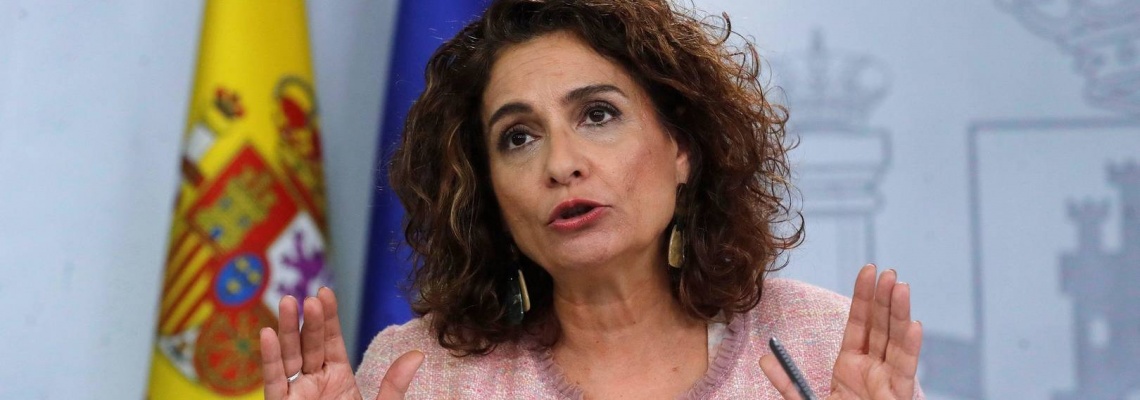
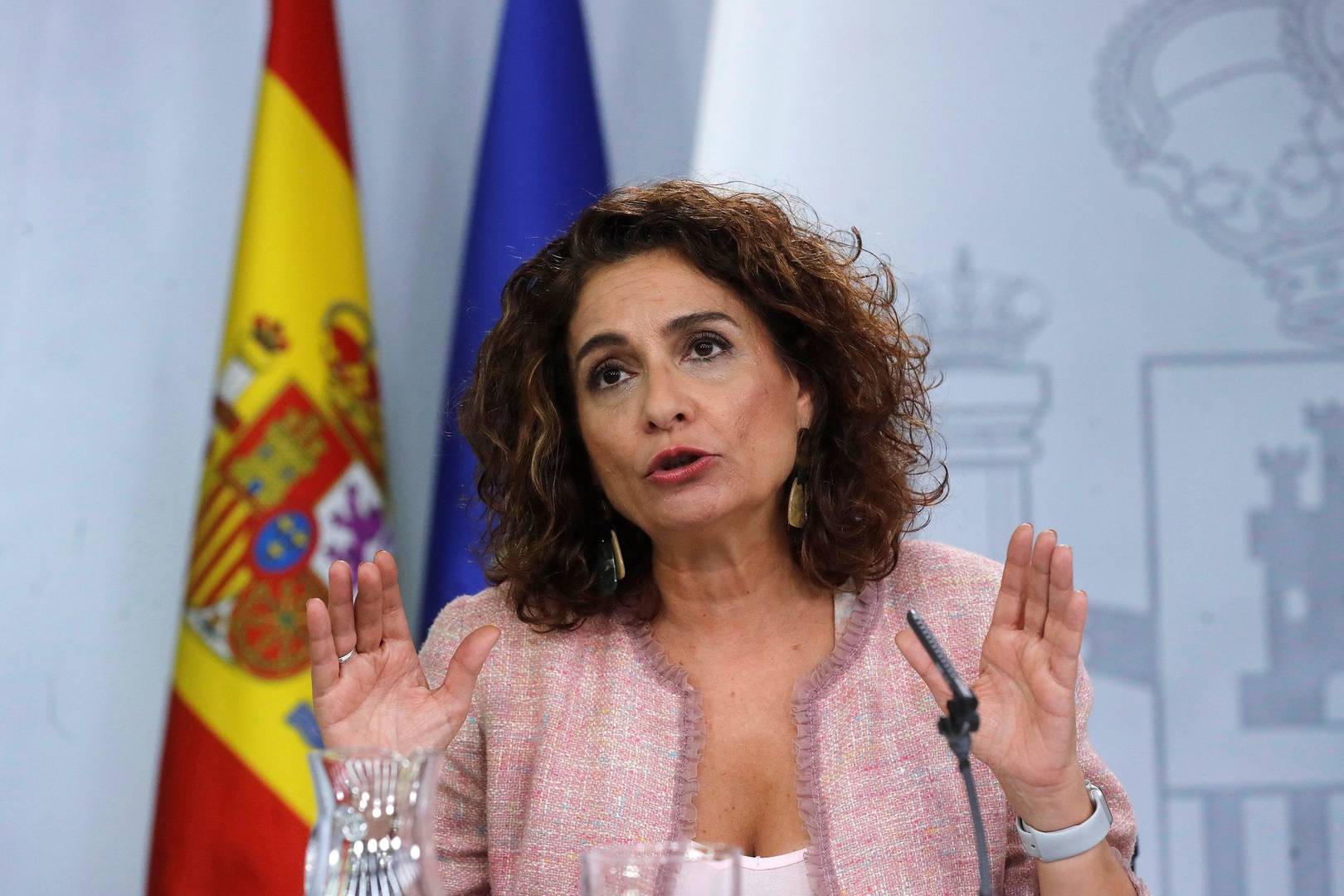
The Treasury Minister and Spokesperson for the Government, María Jesús Montero said in yesterday’s press release that this measure will help businesses fulfil their tax obligations and allow for better cash flow under these difficult circumstances. Associations that represent accountants, economists and the like have rallyed the Tax Office to take this step because of difficulties in contacting clients, obtaining the necessary paperwork etc., but the Tax Office has had a long time to make this decision and has chosen to wait until the deadline to make it official.

I would like to say a massive THANK YOU to all of my clients who have been fantastic throughout this situation. They managed to get their accounts to us and we were able to input their documents and advise them of the tax result before the deadline just in case the Tax Office did not back down. Although most taxes were filed, they won’t be charged to your bank accounts until 20th May 2020 as shown in the decree. All requests for payment of these taxes in installments will also be honoured.

On another note, I have some statistics of interest for you:

* 941.000 applications for sole trader unemployement have been registered

* 396.000 sole traders and companies have applied for ERTEs (suspended contracts for their employees)

* 36.048 employees who have either contracted the virus or have had to self isolate are receiving financial aid in concept of Professional Illness


Since my last post, we have experienced a rollercoaster both personally and professionally as every aspect of our lives is affected by the lockdown in effect. Spain’s lockdown is so far the strictest and our Government has alerted us that it will be extended once again until 26th March, but that it will more than likely be prolonged even further.

The latest decree that affects sole traders and small to medium businesses, Royal Decree-Law 11/2020, 31st March which was published on 1st April contains a series of measures to provide much needed aid.

DEFERRED PAYMENT OF SOCIAL SECURITY CONTRIBUTIONS: The Social Security Treasury will grant upon request a six-month interest free extension on monthly contributions, which for sole traders will be those due between May and July 2020 and between April and June 2020 in the case of small to medium businesses. The irony here is that this was decided on the same day the Treasury charged March’s contribution to our bank accounts!

The specifics to apply for this aid is to be confirmed, but what we do know is that it applies to those businesses whose activity was not prohibited under Royal Decree 463/2020, 14th March. This measure does not apply to businesses that have suspended employee contracts under the ERTE system. We also know that the applications must be submitted 10 days before the fee is due to be charged which is always the last working day of the month. Although applications will be considered approved, the Treasury has three months to officially respond in case the applicant is not eligible to defer payment.

Deferred payment of any type will only be approved if the applicant does not have prior debts with the Treasury, and as always, penalties apply if they detect false information or fraud. This measure is detailed under Article 34 of this decree.

As mentioned, the contribution for March has already been charged, which means that many sole traders and small to medium businesses who applied for Sole Trader Unemployment will be due a refund.

DEFERRED PAYMENT OF SOCIAL SECURITY DEBTS: Article 35 of the Decree outlines that if any sole trader or small to medium business owner accrues debt with the Treasury for payments due between April and June, they may request delayed payment, but 0,5% interest on the amount would apply. This will only be approved if the applicant does not have prior debts with the Treasury and does not currently have an existing deferment in place. The application must be submitted in the same time-frame as described previously.

UTILITIES: Many businesses had to close their doors from day one of the state of emergency, and the Government has agreed that utility contracts (water and electricity) can be suspended without penalty and that payment of bills that coincide with dates within the state if emergency can be suspended also. However, be advised that should you suspend payment, you may not switch company until payments are brought up to date.

DEFERMENT OF MORTGAGES ON BUSINESS PREMISES: Delayed mortgages was first mentioned in Royal Decree-Law 8/2020, 17th March but only for the applicant’s primary residence, however, this latest decree is extending this financial aid to business owners for premises linked to their business activity as well as landlords (natural persons not companies) who are no longer receiving rental income as a result of measures that apply to tenants. This aid applies to those business owners who are considered financially vulnerable due to suspended activities and loss of income. Conditions obviously apply.

FINANCIAL AID FOR PAYMENT OF RENT OF PRIMARY RESIDENCE: Article 10 of this decree refers to special aid that has been put into place for those who forsee difficulties making rent. If the applicant does not meet the criteria for automatic derferment of rent, this line of credit is for up to 900 euros per month or in some cases 100% of the rental amount if the business owner can demonstrate they are in a vulnerable situation.

The Decree is 88 pages long so this is a very brief summary, but their are other provisions for different circumstances, such as receiving payment from an existing pension plan or signing on for benefits to pay electricity bills in the home if you meet the criteria. There are changes on a near daily basis as the Government navigates the minefield that is COVID-19 and the imposed quarantine.

Stay safe!