

Yesterday afternoon, Friday 30th July 2021, the Canarian Government held another plenary session where they discussed the various measures the High Court of Justice has deemed unconstitutional to be enforced.

As you may have heard, this is not the only matter the High Court of Justice have taken issue with as they have blasted the State of Emergency and declared it illegal (more on that when more information is revealed), but getting back to the Islands; the Canarian Government is awaiting clarification regarding the limitations that must be removed.

The biggest issue has to do with restrictions for islands at Alert Level or Tier 4 (currently only Tenerife is affected) where 50% of patrons sat in the interior must have had both doses of the vaccine, a PCR test not more than 72 hours old or a certificate of having had COVID-19 in the last six months.

This meant the establishments are responsible for requesting this personal data from their customers which of course would have been met with resistence, so the Asociación Hostelería Unida de Tenerife (Tenerife United Hospitality Association) appealed this decision and the Court agreed with some of the points raised.

Other measures such as the time when these establishments must close and enforcing curfew are also being questioned. However, until the High Court of Justice comes back with a resolution, all hospitality establishments must close at midnight on islands at alert level 4.

For now and due to the number of current cases, each island will remain at the same alert levels as last week. We’ll have to see what unfolds after the High Court deliberates…


If as a business owner you have employees, you may have received communications from your Advisors to implement a method to register your employees regular work hours as well as overtime as per Royal Decree 8/2019, 8th March, to be enforced from 12th May 2019. Why has this come about and what is the point of registering employee work hours?


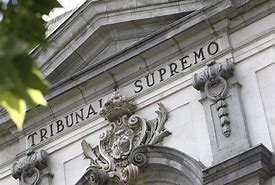
This week has seen unprecedented Supreme Court action that has unleashed all kinds of mayhem on an internal level, not to mention the consequences this has had on the financial sector. Over the past few years we have seen thousands of court cases revolving around the financial sector and their methods when it comes to granting mortgages. The primary issue was in relation to the infamous Floor Clause inserted in mortgage agreements (in many cases without advising the mortgage holder!) but a Supreme Court ruling in favour of mortgage holders obligated banks to reimburse any benefits obtained which could be a few thousand euros per case. The secondary issue and the one this article referrs to has to do with reclaiming the Stamp Duty paid on the Mortgage Deed.


Despite the deep hole Spanish banks have dug themselves over murky mortgage laws which has culminated in the refund of all monies property owners have grossly overpaid during the life of their mortgages, they are in deep water again with the European Commission (EC) for non-fulfillment of their obligations.

Along with Portugal, Croatia and Cyprus, on the 27th April 2017, the EC has decided to bring Spain before the Court of Justice of the European Union (CJEU) for non compliance of the agreement to incorporate EU mortgage legislation into their own.

These countries had until the 21st March 2016 to include EU directives into their national laws but they have failed to do so and as a result they have defied regulations that would create a unified mortgage credit market across Europe with consumer protection high on the list of objectives to achieve.

If you bear in mind that Spain had to be “rescued” financially by Europe to resolve the chaos that ensued after the fall in the property market, it is incredible they would once again defy EU rulings in this matter. Even though the Spanish government declares the required text is being prepared, it has now been two years since formal proceedings began but they have yet to even produce a draft copy of new measures to be enforced or even a specific time-frame as to when this document may be available. They also state the reason for the delay is that Spain did not have a working government throughout 2016 so this matter could not be advanced further. Now it rests in the hands of the Court to evaluated the situation and take any action they deem necessary.

Why issue does the EC have in the way Spain handles mortgage constitutions? Basically the  total lack of transparency as many were not duly advised of the now famous floor clause meaning they would not benefit if the interest rate fell before the rate stated in their individual contract. This in itself goes agains consumer rights and principles based on legislation approved back in 1993. Take on board also dubious evictions and there is a serious case against the Spanish Economic Ministry.

In other news, BBVA has finally begun to refund their clients all overpayments incurred because of the floor clause FOUR years after the Supreme Court deemed their contracts null and void and even after they declared last December they must return these monies. Despite these rulings against their practices, BBVA resisted and delayed as much as they could until finally they have been forced to comply. In the latter half of April, they began to advise and pay their customers what they are owed.

To this date, I have received information showing that some banks still include some form of floor clause in newly formalized contracts but it is detailed or “disguised” differently. Be aware of these practices and contract legal advise if you are unsure whether your mortgage includes a floor clause or not.

Stay tuned to this blog as I will be announcing news shortly about reclaiming YOUR bank for any monies you may be entitled to as a consumer.


It has been a tough few months what with tax season but now that it is behind us here at the office, I can return my attention to Canary Bloggers as it has been pretty much abandoned lately. So much has been happening, regulations that have gone unnoticed in recent years are being discovered so plenty of reading and research is going on at the moment.

Well, this article brings what will hopefully be the start of great news for motorists in Spain. As we all know, Trafico engineers laws to their convenience and not always to the benefit of road users. Some of their campaigns are viewed as an easy way to earn a fast buck than actually creating road safety awareness. Anyway, the point of this article is that AEA, Automovilistas Europeos Asociados  or European Motorists Associates has fought and won a long 5 year battle against traffic regulations established in 2010 in Madrid in which agents fine motorists without actually informing them on the spot of their alleged violation, rather, surprised road users receive the dreaded and familiar looking notification by post advising them of their “crime” way after time and the AEA has declared this type of action as completely illegal. According to the Supreme Court, agents must stop the offender at the time the offense has been committed as long as conditions and traffic safety allow it. If it is deemed impossible to detain the offender, the agent must fill in a detailed report explaining what impeded them from taking action.
